Big Game Drive! Ndutu/Serengeti, Tanzania

1/30/2018
Big Game Drive!!

Melissa and I decided while planning this trip that we could not come all the way to Tanzania and not see wildlife. Thus today was entirely and exclusively about wildlife, and Daudi did not disappoint. He was the best driver and spotter of animals. Again, I will include more details in the animal post to follow, but I cannot go without detailing the events of the day.

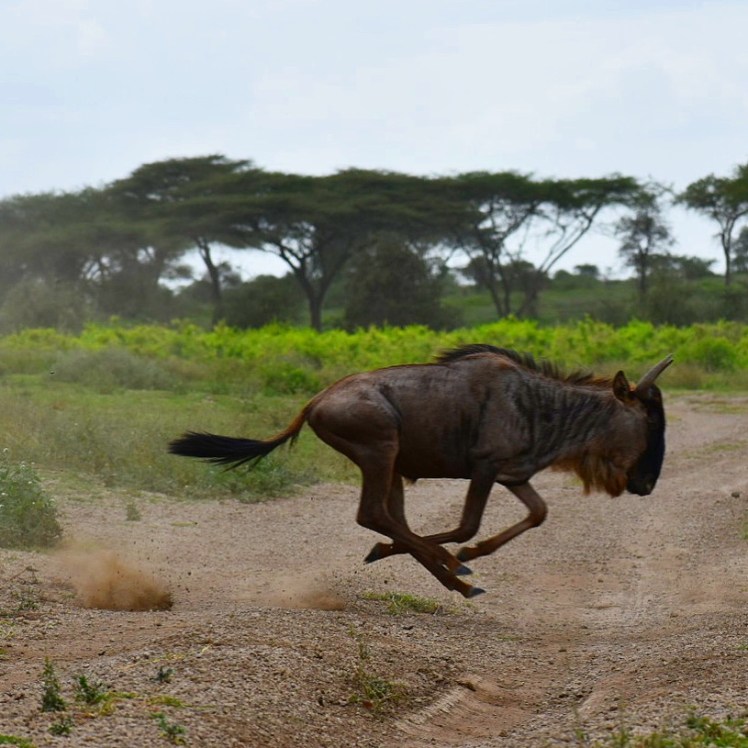
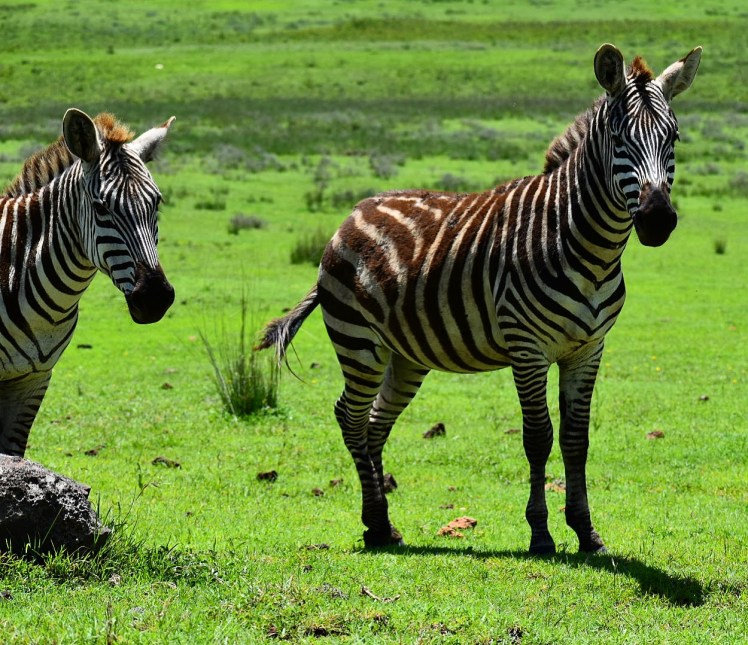
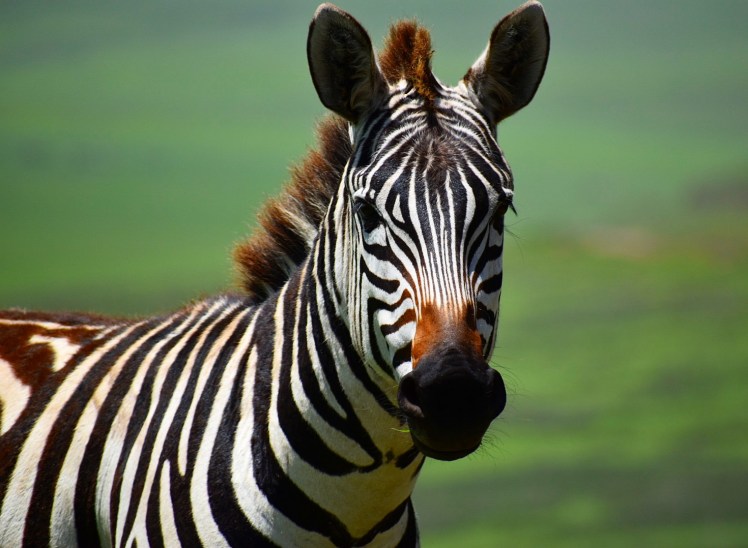
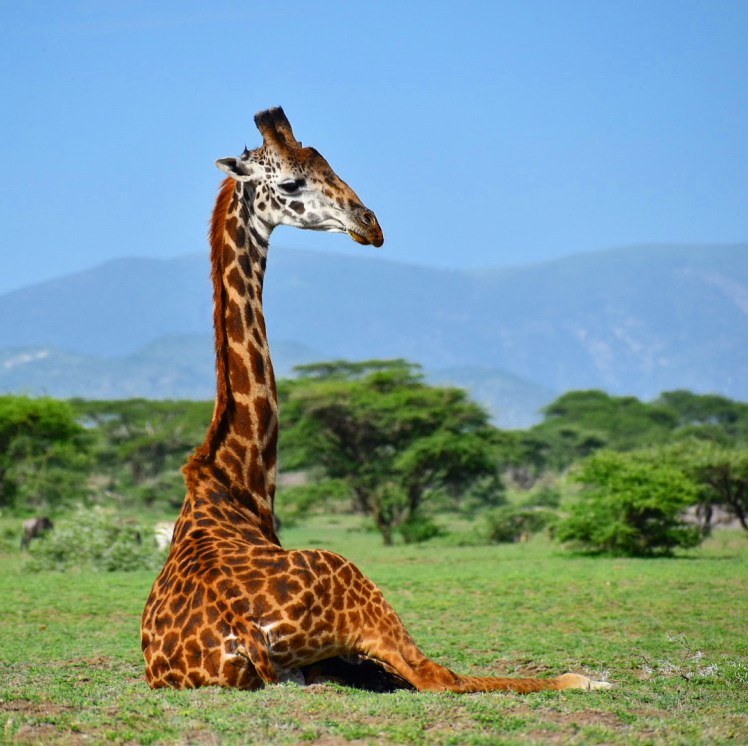
Our camp is called Nauri Kisaruni, and we started the drive from there. Immediately we saw wildebeests, an aardvark digging hole, wattled starling, zebras, Grant’s and Thompson’s gazelles, a huge group of elands (Africa’s biggest antelope), kori bustards (largest bird that flies, it is ground nesting), ostrich couples (males have black feathers and females are gray; I was amused to think the Fantasia scene is a bunch of male ballerina ostriches…), crowned plover, nlack-crested snake eagle. There was a big luxury camp with large wooden cabins built around a kopje on a hill with a platform built to the top of the granite hill. Giraffe (Tanzania’s national animal), white-backed vultures, marabou storks, and more zebra, wildebeest, and Thompson’s gazelles. There are something like 2 million wildebeest, 700-800,000 zebra, 500,000 gazelle (mostly Thompson’s), and 200,000 impala in the Serengeti herd, which are all migrating to Ndutu currently. I do not have tallies for the rest of the animals. The wildebeest are literally in every direction to all horizons. Including giraffe and elephants, these grazer/browsers can all cohabitate because they eat from different levels of the vegetation. A symbiotic relationship at its best.

Then we entered Ndutu, Masai for “high animal concentration,” where the soil notably changes to reveal a higher phosphorus level, hence why most of the herding animals migrate to breed here.

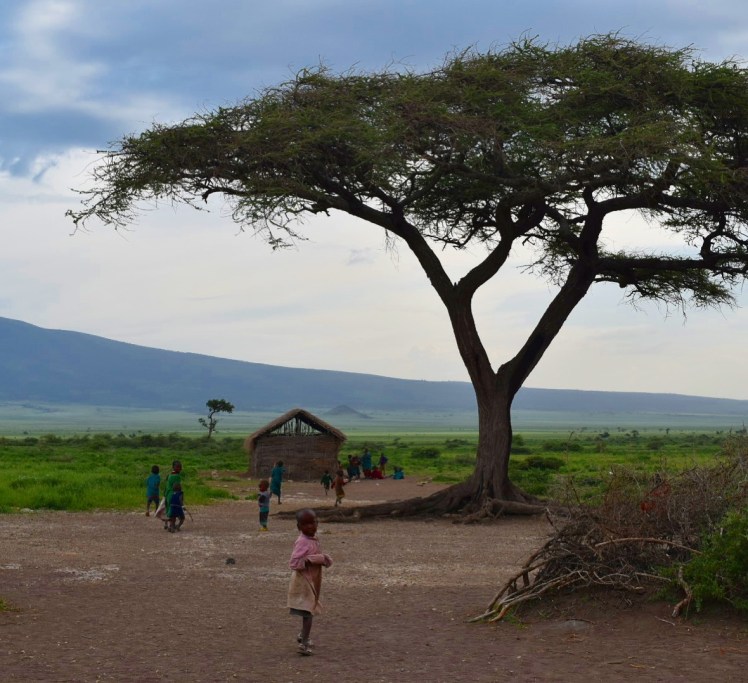
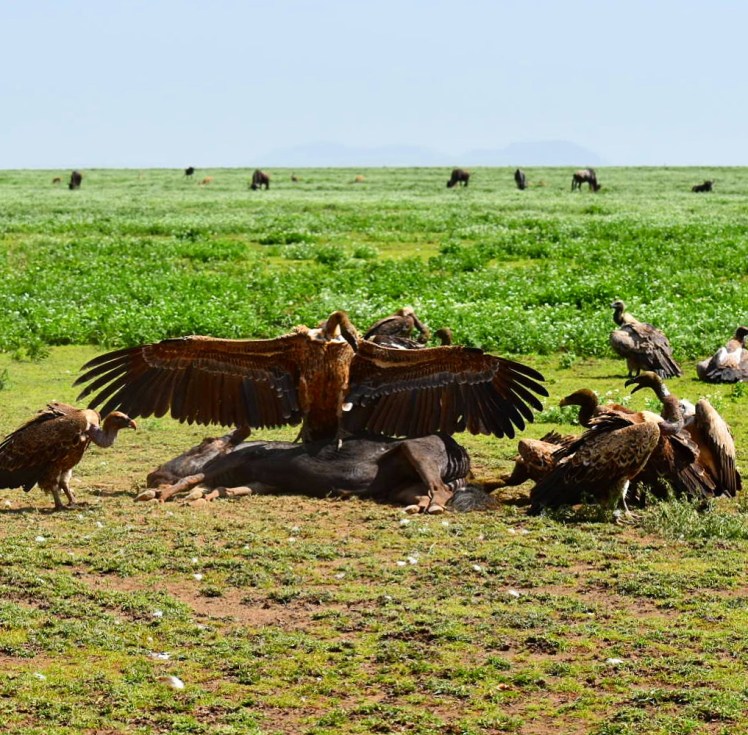
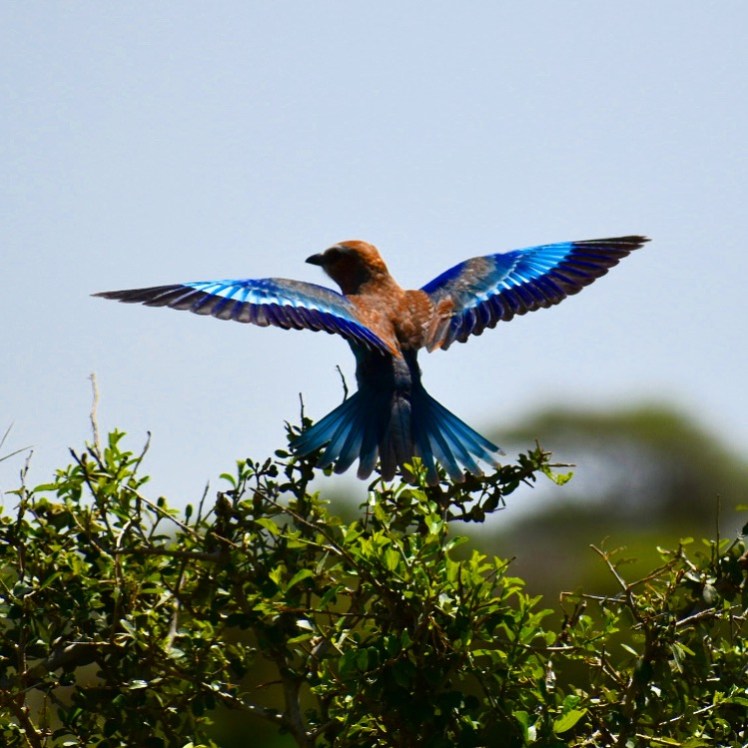
We stopped to watch female dung beetles roll eggs into fresh dung and then male beetles come to roll the poop ball away and bury it in a hole. Quite prodigious creatures. Lappet-faced vultures, more wildebeest, an acacia tree (often called a devil tree on the plains because there are literally no trees in the plains except for these random lone acacia trees creating shaded caves underneath), grey heron, Egyptian geese, and common snipe. Then we rolled up on a freshly dead wildebeest swarmed by white-backed (or African) vultures, Ruppell’s griffon vultures, and marabou stork; all scavenger birds. Eventually other animals or birds will come take their turn, but the white-backed vultures were dominating the feeding. It is slow-going for them though because their beaks are not strong enough to rip hide, so they can only get in through the anus. It was quite a sight! If a lappet-faced vulture showed up, it would dominate over the rest, and would be able to rip open more parts of the animal. It was so interesting watching this scavenger feeding hierarchy and the displays of aggression even among the white-backed vultures. We saw a hyena covered in mud to cool off from the day’s heat, Grant’s gazelle, a newborn baby wildebeest (maybe 1 day old), white stork (or European stork), baby zebra (less than a month old), giraffes, superb starlings, and a dik-dik trio (they mate for life so any trios mean the third is an offspring). Then we saw a Lilac-breasted Roller. It is Daudi’s favorite bird, and I can see why. It is beautiful! And as it flies it will spin sometimes, hence the name “roller.”

We saw a long-crested snake eagle, impalas, and then, African elephants! African elephants (the savanna ones) are my all time favorite animal. I literally have a family of them tattooed on my arm. This was one of the single most important experiences for me. I have always been in love with these majestic beasts. While I spent a year traveling across South America after university, I had the opportunity to meet one and interact with it, and see others in their pen. This statement rang true for me then:

Long ago and far away, Edie Banister was told that a human soul infallibly knew its own value when it was reflected in the eye of an elephant.
Angelmaker by Nick Harkaway

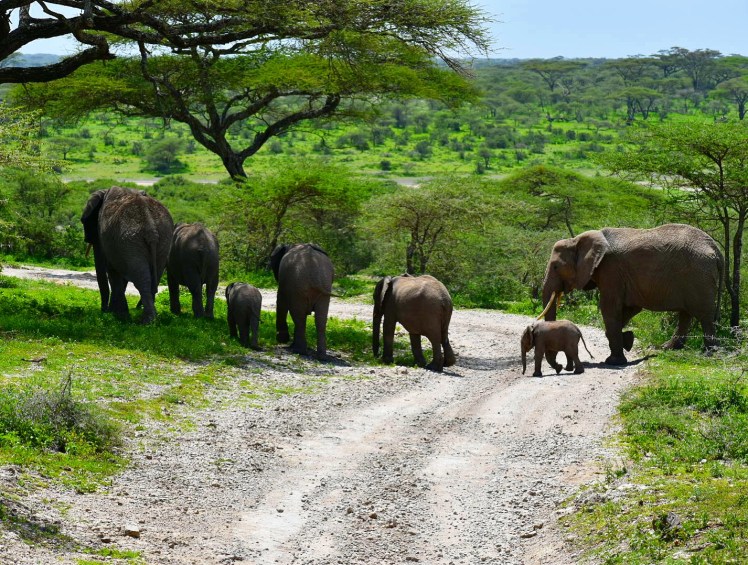
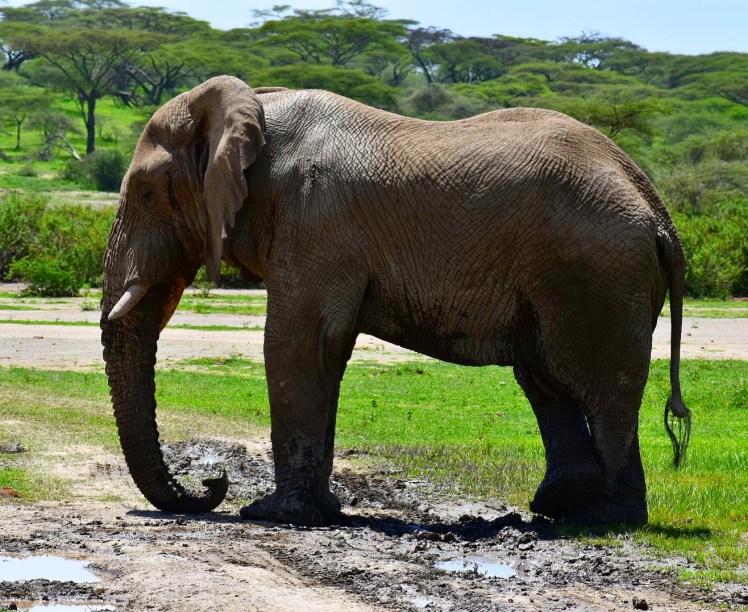
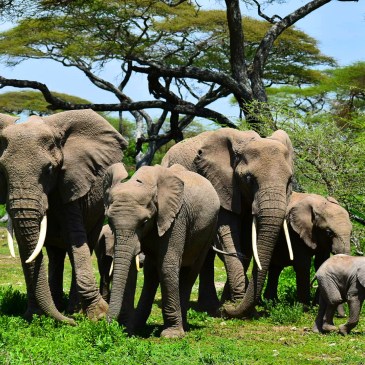
They are so beautiful, their eyes so expressive, their significance undeniable. But I wanted to see free ones. I wanted to see my value in the eyes of a beast master to itself. Not ones poked and prodded for the entertainment of tourists like me. I do realize the irony as we invaded their space here as well, but these amazing beauties were free, dignified, and know they are the true masters of their world. It was a matriarchy of seven. The lead female, her next-in-line, two helper females, a three year old, a one and a half year old, and a less than one year old. I seriously teared up while watching them. Upon our invasion they instantly rallied around the matriarch, protecting the three young calves inside their circle, watching us with knowing eyes. Once deciding we weren’t a major threat, the older three shuffled along the calves while the matriarch came quite close as if to say, “I will crush you, so keep your distance.” Everything about these animals mesmerizes me. Females are typically between 6600-7700 lbs, while males range from 11,000-13,200 lbs. As the largest land animal, they have no predators (Except humans, particularly poachers, for whom I maintain quite strong and dark feelings toward. No creature deserves the brutality that poachers inflict.). They are incredibly intelligent, have very long memories, and mourn. They are wiser than we humans know, you can see it in their eyes. Shortly after leaving them, we came across the male elephant, covering himself in mud to stay cool. He was massive. And we could see him communicating to the matriarch through infrasound using his feet. I won’t forget this incredible experience.

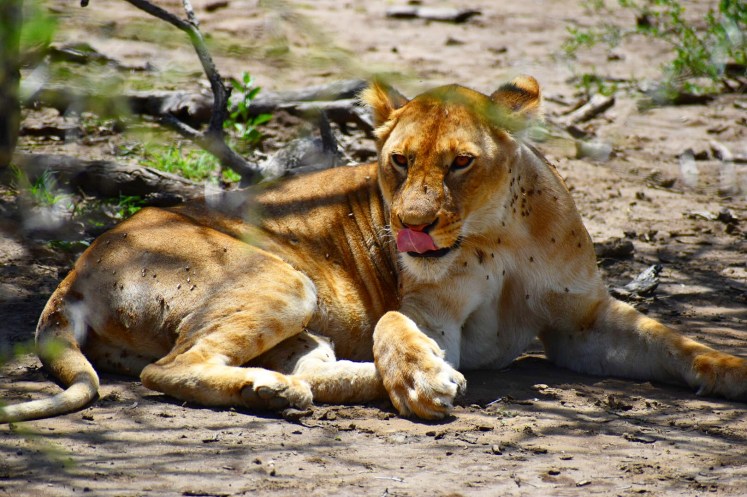
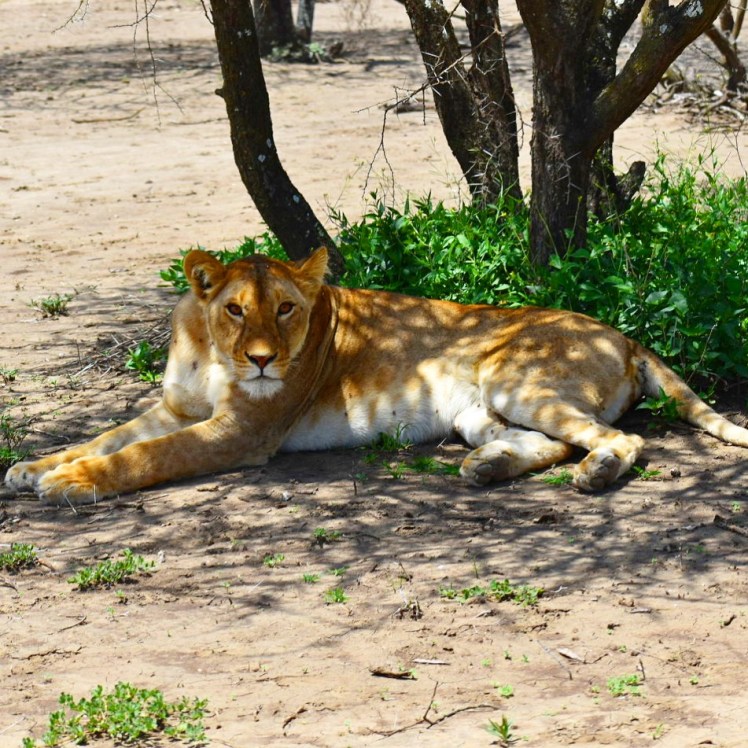
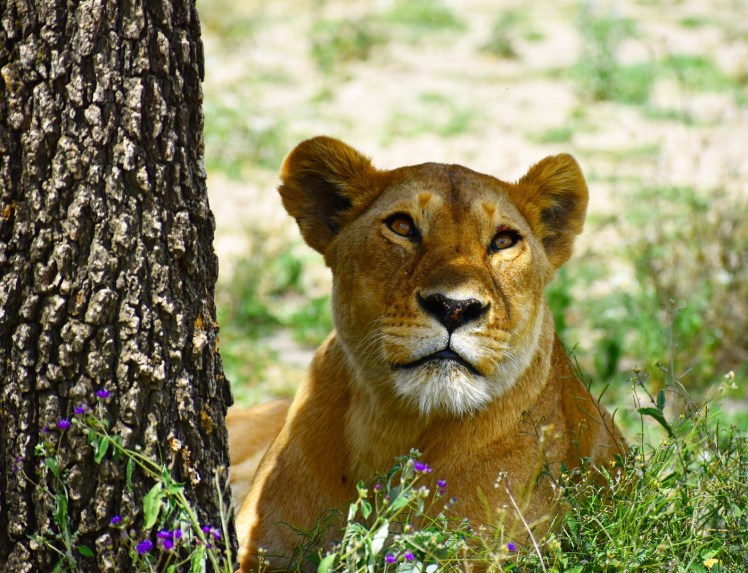
We headed toward Ndutu Lake, moving into the woodland, spotting impala and helmeted guineafowl. Then we came across two female lions (both less then 6 years old based on their pink noses), resting in the shade of two trees. As nocturnal cats, they seemed completely unaffected by our presence to their napping. Then giraffes, impalas, black smith plovers, tawny eagle, batau eagle, northern red bishops, steenbok, agama lizard, and red-necked spurfowl. Then we stopped for lunch while overlooking a swampy marsh. Already an incredible day, Daudi wanted us to see more. We found another lioness, watching over some wildebeest below, then headed back to the grassland. We found a hyena which lead us to another hyena hiding in the brush, which scared out an African hare, then wattled starling, red-eyed dove, and another acacia species (apparently there are a bunch of acacia species).

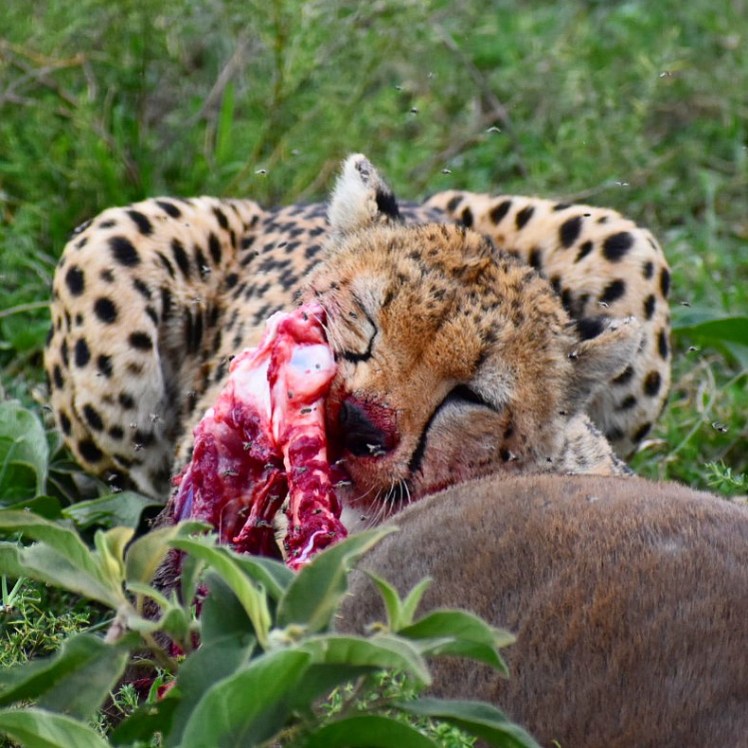
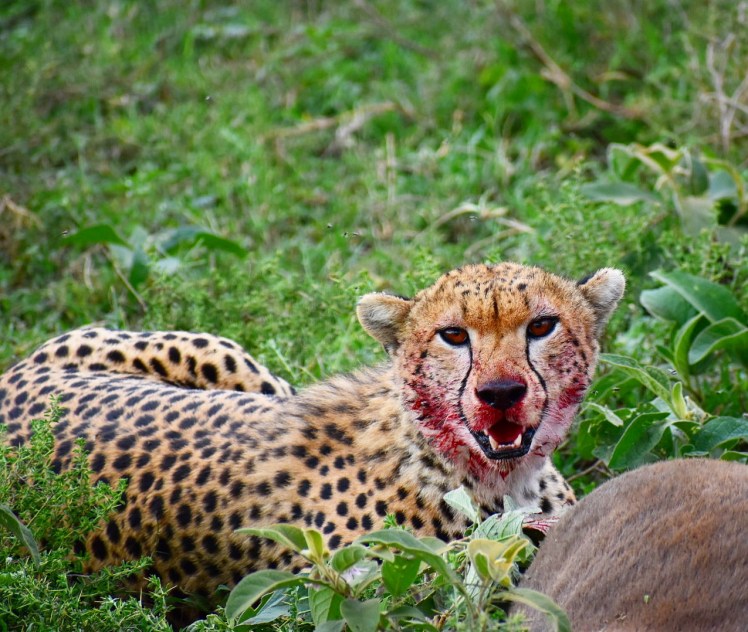
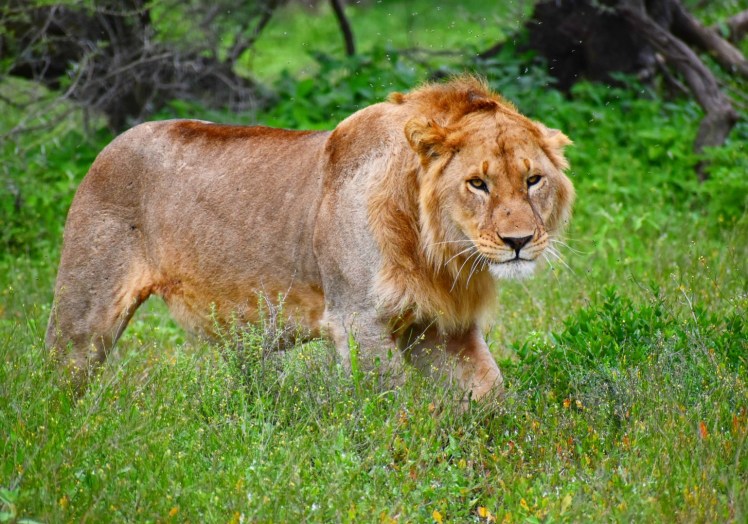
Up ahead we saw a swarm of vehicles, respectfully making only a half circle, around two male cheetahs chowing down on a fresh wildebeest kill! We missed it by less than 30 minutes, but the feast was still exciting. They had a young wildebeest and were still working on the thighs. Cheetahs are diurnal, but still at risk from lions and hyena attacking to kill the cheetahs and steal their meal. In a weird way our presence at their feast may have helped them keep a meal, as lions are less likely to come over with the crowd, but it would be impossible to calculate the true impact of our presence (I suspect more harmful than good). The brothers took turns feasting, both still panting from the attack. Truly incredible. Not far away we found a male lion resting up in a tree. He was massive with a big huge mane. Though not common, lions are cats and will climb trees for a vantage. This one became unsettled and took off, I caught his ungraceful leap from the tree with my camera! Males here tend to survive only until they are 10 or 11 years old, while females can survive until age 20-25. Males are responsible for protecting their pride from other males, so it is a tough and short life for male lions on the Serengeti.

At this point we had to leave. Unfortunately the rules prevent sunrise and sunset presence in Ndutu unless you stay at the expense park camps, and even then it is limited. We saw Lake Ndutu from a distance, revealing the pinks and greys of Greater and Lesser flamingos with their young (the grey colors). We went close to Lake Malek, but never had a vantage. On the way out we spotted two silver-backed jackals, augur buzzards, and more superb starlings. Then the sky threatened to open up and pour down rain, we could see the streaked sky all around us, so we raced back across the plains to prevent getting stuck since the second water is added to the Ndutu soil, it becomes a sticky and thick red clay. A clay we would find near impossible to escape.

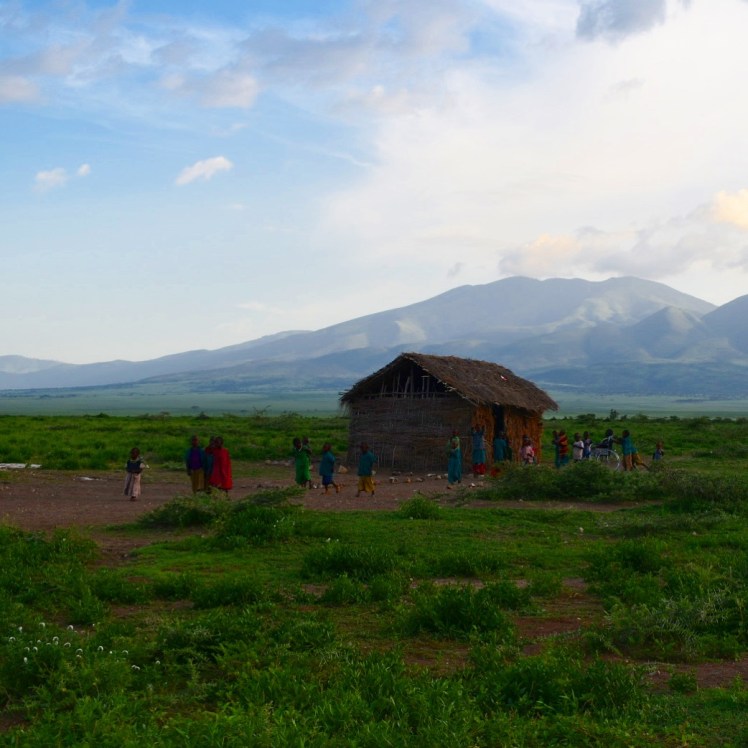
One last stop before we returned, our kopje visible in the distance. We went to a cultural boma to learn about the Masai. There are two bomas in the park, sanctioned by the government. A boma is the traditional living quarters of Masai, now where they gather to learn about and share their culture. It consists of a circular barrier of branches, within which are built small mud huts maintaining a center area where where all livestock (cattle, goats, donkeys, etc.) are kept at night to protect them from predators. A real boma consists of a single family, that is a man and a hut for each of his wives. There is not enough space here to discuss their interesting practice of polygamy, so I will let you research that topic on your own.

They welcomed us grandly, pulling us into their song and dance. Our guide, Liza, one of the Masai chief’s sons, led us through the village. We saw inside a traditional hut, visited the school where children sang us songs, and bought items from their market. It was a neat experience, and we were happy to contribute to their community and help support the children’s education. More and more the Tanzanian government wants Masai children to attend primary school, so they all need an education before then, primarily to learn Swahili and English. Masai children are taught to be trilingual: the Masai language plus Swahili and English. I gather that almost all Tanzanian people have to learn Swahili and English as their second and third languages, since most people belong to a tribe and all tribes have their own languages. Imagine if the US worked harder at bringing languages to our children rather than a half-assed requirement in high school. Maybe one small step to broadening our nation’s small bubble of ignorance and intolerance. For what other country demands everyone speak English, and then comments harshly about the challenges of traveling abroad where English is not spoken. Anyway, I digress.

We continued back and found our camp had expanded. Already from the first night we had gained a toilet tent, chairs to sit on around a fire, a food tent where Kimambo presents our meals on camp tables, and a cook tent with a second fire and chairs and table. Now we also have a shower tent. Both Melissa and I reveled in our showers while in Qatar because we earnestly thought they would be our last until after this trip was over. Nope! We had showers at the hostel, showers at the first night’s camp, and now a shower at this camp. And honestly I enjoyed this shower most of all. It was one of those solar heated bags with an open/close pull-to-spray spigot. They are so divine. But also it is probably nice for Daudi and Kimambo to not have us go a whole week as dirt-streaked sweaty bodies. The heat here really catches you off guard after sitting in a sticky seat all day.

We have really settled into this life. I have long stopped asking to help, instead busying myself with the bird identification book or reading The Poisonwood Bible by Barbara Kingsolver. It is easier than seeing Daudi and Kimambo find new ways to tell us we are guests and that is just how things will be. They are really both so kind. I forgot to mention that every day at lunch we get a cold drink from the powered cooler. My favorite is Stoney Tangawizi, a carbonated ginger soft drink. I’ve had one every day. And each night at supper we rotate between red (my preference) and white (Melissa’s) wines from South Africa. We would seriously grow fat if we ate all the food they give us. Kimambo is a spectacular cook, but a stomach can only hold so much.

I settled into bed fat and happy after an unforgettable and incredible day. I could imagine guiding here is an amazing career. No two trips the same, all incredible and offering something new. What a life.
 

A782A354-7BD4-4FD0-ACA1-AC185B986AEA0D07AA53-2067-4953-A099-81753670D699248D4D19-9959-4B0F-B766-853185F862EB06F5659A-4F65-487C-8793-D7BF4ACB204D657CD16E-41D7-4DF0-805D-D043282049C0F8FEAEA5-F12D-49F9-8D81-5DA3A2ACF044DA77B8FC-182C-4147-9B1E-9EF3792A3002F687C28C-514F-47B7-916C-534C141176DD0C7ED800-B4E5-49EF-8AF9-FC12B67A9155F8AF8961-71FE-419E-B80C-F4BB448AC4E9582EB4F6-D40F-4F74-B7A8-371BA163C204520FCECD-CF46-4F72-8F3B-F144008BFD4C4C37E051-EBA9-44D3-8131-250AF78571D8BF8CFC0E-0B02-4C61-99AB-817882D3EBC5D6FB3133-022D-42CB-AE70-A877FB641E762E3D4732-FE42-4DF3-BF72-72348EDDBB557FFD2DA9-F7D1-4405-BA27-41DAA6528DD2890E1532-F9C3-4B3E-8AEA-ED8189E4D5CF

Walking with our ancestors: human evolution in Olduvai Gorge

1/29/2018
Walking with our ancestors: human evolution in Olduvai Gorge, Ngorongoro Conservation Area, Tanzania

Today was all about how human evolution and geology teamed up to record some of our earliest ancestors. We started with a huge delicious breaky then waited for Kimambo and Daudi to pack up camp, without our assistance. Once on the road we headed for the gate to Ngorongoro Conservation Area. We had already noticed how the plain we drove across was of a rich, red, volcanic soil. This nutrient rich soil coupled with moist micro-climate from the highlands have created a prime agricultural area and fertile forest compared to the Rift Valley floor.

Ngorongoro is a Masai word that has many meanings: first, it is the word for “bowl” because the crater looks like the Masai grinding stone bowl; second, it is another name for the tribes (Mbulu and Datogo) the Masai drove our to gain this area; and third, it is the sound that cowbells make (cows being very important features in Masai life for milk, blood, meat, and money). Originally the Serengeti was a huge area, but when the government made it a national park they wanted to remove the tribes living there. So they split it into three portions, Ngorongoro Conservation Area where Masai can live but not hunt, Serengeti National Park where no people or hunting is allowed, and Loliondo where Masai and other tribes live and hunt and where game hunting is permitted to tourists. Though the NCA and Loliondo do not have the notoriety of SNP, they are important migration grounds for animals. In fact, right now, most of the animals are migrating through Ndutu away from the Serengeti. Serengeti is also a Masai word (actually spelled Sirengeti) for “endless plain.”

Ngorongoro is a very large volcanic province of basaltic shield volcanoes. The crater is actually a huge, intact, and unfilled caldera. It formed 2 to 3 million years ago from the collapse of a large volcano that is predicted to have been of similar size to Mt Meru and Mt Kilimanjaro. There are several freshwater springs that feed into the crater and collect at Lake Magadi, enabling lush vegetation growth. The volcano was basaltic with minor trachytic lavas.

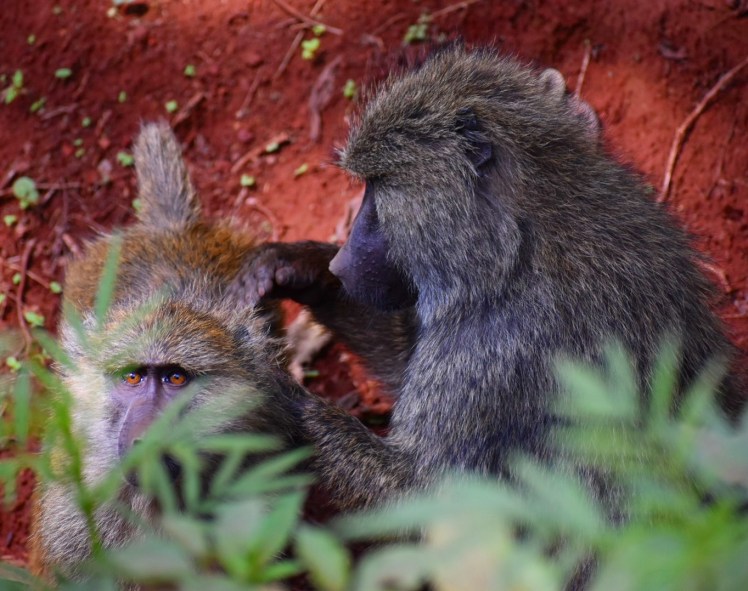
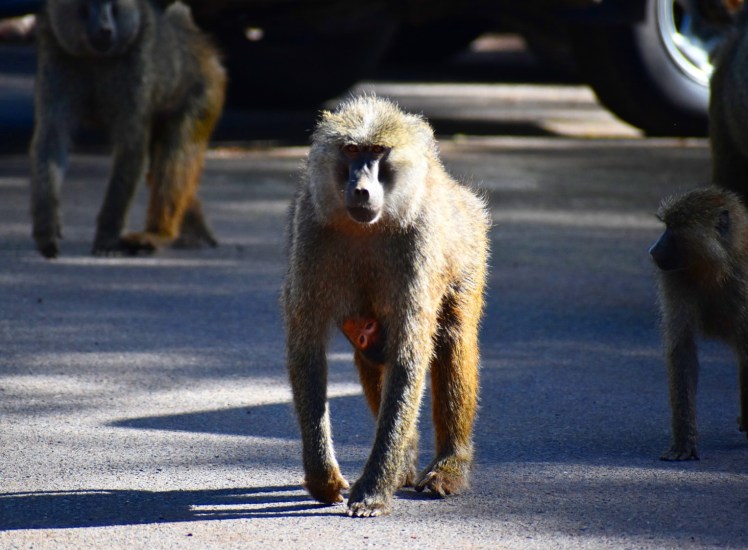
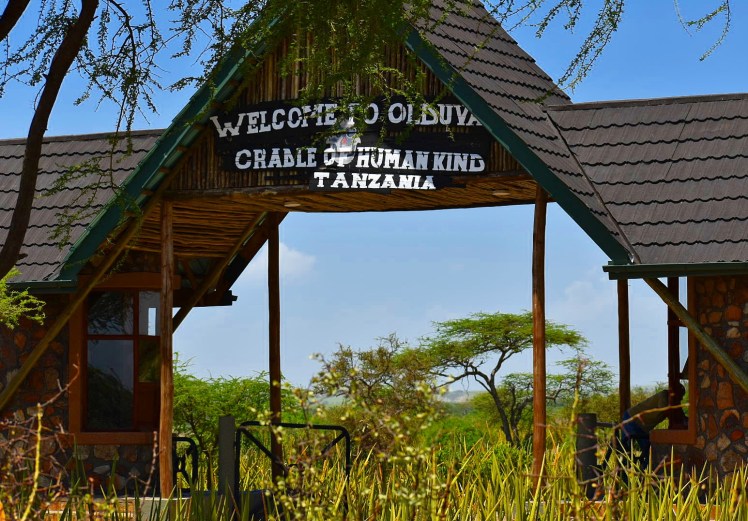
While at the gate there was a bit of a wait while Daudi worked out a mixup with our reservation number. It was fine with Melissa and I though. There was a small museum area showing the region, geology, and common animals and birds. We enjoyed it. Then a troop of baboons came to play at the gate with all the parked vehicles, looking for mischief. The alpha male walked about a foot away from me as he climbed up our truck followed by a mother baboon with her baby clinging under her belly. Baboons are so desensitized to humans they will go into open windows looking for food, and if they find nothing, they will leave a giant deuce (i.e. poop) on the seat as punishment. As funny as that sounds, the troop spotted a vehicle with an open window and one baboon was able to run off with what looked like bananas. It was hilarious watching the men run off the baboon, already in possession of its prize. It climbed right up a tree and stared down at the ruffled humans below. Silly humans.

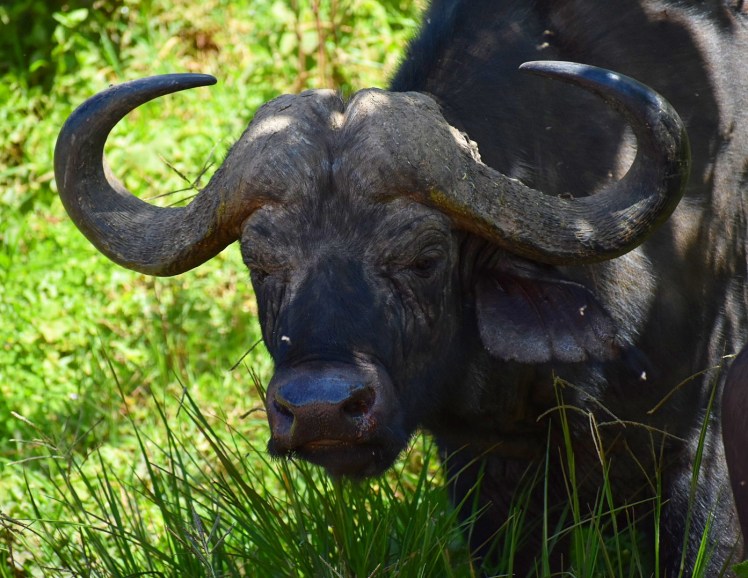
To our delight, that was not our only wildlife exposure today. We saw so many animals! First, there was a group of Cape buffalo, or African buffalo (Syncerus caffer), right on the side of the road munching through the tree-covered crater rim. I decided to make a special animal recap post for the end of this trip since there will be so many interesting animals, so keep an eye out. We then had a vista down into the crater and saw what Daudi said were maybe black rhinos or wildebeest, its impossible to say without super zoomed binoculars. Melissa and I almost paid the steep price to drive through the crater, but Daudi convinced us we were mostly just missing black rhinos and they are rarely anywhere near the road. There are a few other other animals we might have seen in there, but we trusted Daudi’s advice. Being only 20 members strong as the final genetic offerings of black rhinos, we completely understood their distant lifestyles and let them be. Continuing forward, we also saw giraffes, Grant’s gazelles, zebras, more olive baboons, Thompson’s gazelles, wildebeests, an agama lizard, two dik-dik antelopes, numerous dung beetles, and a hyena. A bigger part of the animals was my discovery that Daudi went to university for wilderness guiding and specialized in birds! We saw so many! Little Bee-eater, Cinnamon-chested Bee-eater, Kettle Egrets, Speke’s Weaver, Helmeted Guineafowl, Pied Kingfisher, Common Ostrich, Kori Bustards, Augur Buzzards, Marabou Stork, Eastern Pale Chanting Goshawk, Ring-necked Dove, Red-eyed Dove, Red-billed Oxpeckers, Red-necked Spurfowl, and Lappet-faced Vultures. Daudi also pointed out thorny Acacia trees, Baobab trees, Amarula trees, and these massive termite mounds that littered the landscape. And this was just while driving to Oldupai Museum.

Oldupai is Masai for a type of plant native to this area. The misspelled name Olduvai comes from a German explorer. It seems there are numerous misspelled names from Masai words across all this territory. We lunched in the sun by the ranger gate and then went to meet our origins.

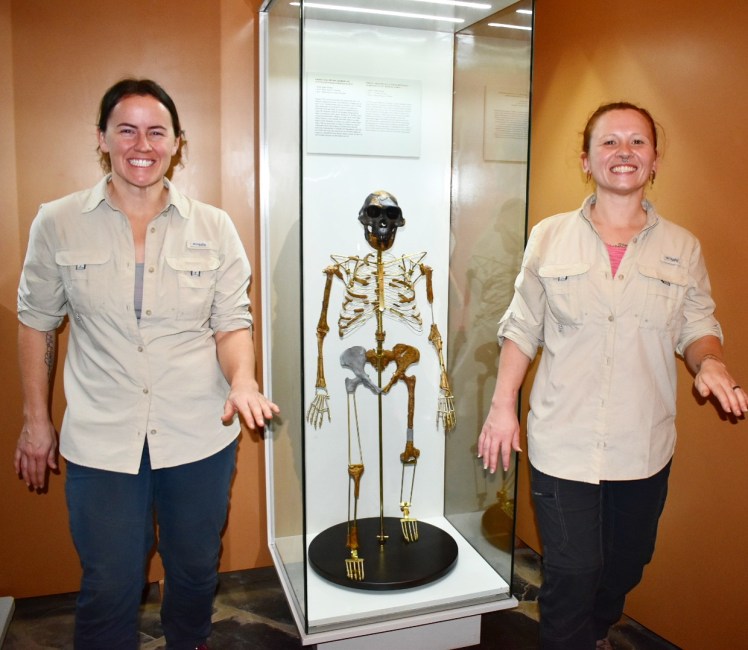
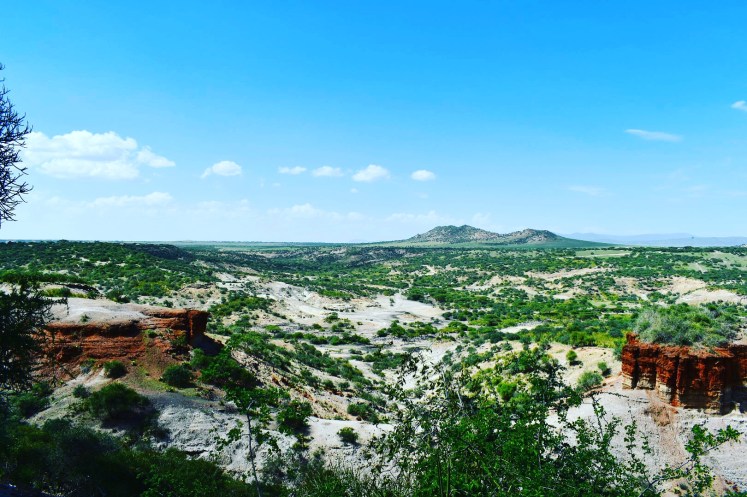
The museum is actually pretty small, but it is packed with information. It is divided into rooms based on both the different archeological rock units the specimens were found in and the specimen ages, a somewhat nuanced distinction at first. Oldupai Gorge preserves about two million years of human history. In 1959, Dr. Mary Leakey discovered the skull of Zinjanthropus boisei, and subsequently Homo habilis and Australopithecus, to show that three distinct forms of human ancestors co-evolved in the Oldupai basin. Potassium-Argon radiometric dating revealed ages for Zinjanthropus, Homo habilis, and Oldowan stone artifacts of 1.75 million years (Leakey et al., 1961). These discoveries ignited paleoanthrological research in Tanzania, Kenya, and Ethiopia. This work culminated in a consensus that the unusual geology and climate of the East African Rift valley created an environmentally complex and variable setting which may have driven human speciation, encephalization, and migration out of Africa (Maslin et al., 2015). Thus, highlighting the relationship between hominin history with geology (paleosols, fluvial sedimentation, tuff layers) and Milankovitch-driven climatic precession cycles on lake basin and ground water levels (Ashley et al., 2014; Habermann et al., 2016). Oldupai Gorge would have greatly resembled the Lake Manyara basin, a modern analog, situated at the rift floor. This basin provides excellent paleoanthropological and paleoenvironmental preservation due to extensive marker tuff layers separating the depositional beds. Preservation is so perfect, individual blades of fossilized grass can be identified in the uppermost surface of Bed I (Bamford et al., 2008).

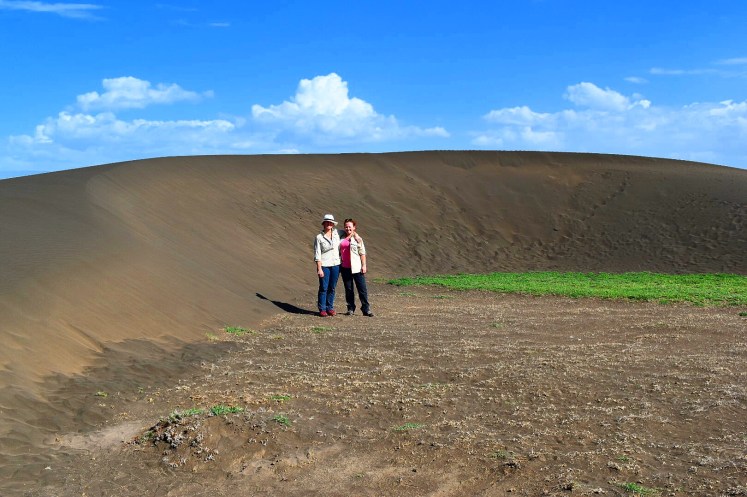
After finishing the exhibits, we gathered on a vista overlooking the exposed basin where the Leakey’s excavated most of the specimens. It was pretty humbling as a human to look across the landscape holding many of the known secrets for our species. And then we went down to the shifting sands. There are two anomalous sand dunes slowly shifting across the landscape. It made me think of how the Great Plains in central US had shifting sand dunes through much of the Holocene, but here on a microscopic scale. They are very weird. Apparently they form from excess ash accumulating around a rock or some structure, until a lot of material has built up. Since the sand is volcanically derived, it has a lot of iron, making it slightly magnetic, further promoting a cohesive dune body. If you throw the sand straight up, instead of blowing away, it will clump together and fall straight down. Then a unidirectional wind slowly migrates, or shifts, the dune over time. Currently about 10 meters per year. That same wind movement creates the distinct crescent shape of the dune. And there are hundreds of dead dung beetles floating around in the pile. It was a strange encounter. Unfortunately we did not have enough time to visit Laetoli Footprints. That would have been extra special. I suppose my title is misleading since we never actually walked along the footprints. We did see all the remains and footprints replicas. I still feel tickled since this is where they mostly come from, so replica or not, my feet touched the same earth. Most of the specimens collected from Oldupai are now housed in the Dar es Salaam Museum. I can understand. Security is low here and exposure to the masses is more obtainable in Dar es Salaam.

We also viewed an active dig site for a group from Spain who found rhino bones in an ash layer. They only started three days ago. Just think what they might find! Unknown archeological riches may be found in the different beds as current interests expand the efforts from the Leakey’s. We saw Leakey Camp too. Originally Melissa and I were trying to stay there, but we never heard back from our various inquiries. We did have a neat connection with the guide who took us to the shifting sands, he knows Jackson Njau, one of the Indiana University professors we contacted during our research. James Brophy (geologist) and Jackson Njau (archeologist) provided us with an extensive field guide they have created for a summer field course they bring to Tanzania each year.

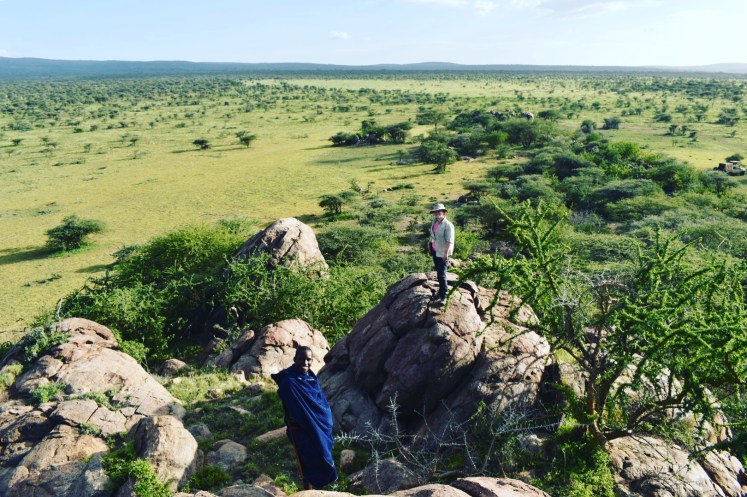
After our gawking at the museum, we picked up our Masai camp host, Lucas, and he lead us to where we were allowed to camp. Right smack in front of a kopje! Part of camping in the NCA is that we must have a Masai host. This is a Masai rule, but also for our safety. The second we stepped into the NCA Melissa and I were made aware of a single important rule: we were not allowed to ever leave camp or go walking anywhere without being safely situated inside our vehicle. This is because the NCA is where people and wildlife still coexist. And as ignorant tourists, chances were high we would become the lunch of one of those animals if not kept under strict observance. I was literally chastised for walking too far away from the truck to pee even though the area was completely open. Lions, cheetahs, and hyenas like to hide in low scrub, buffalo and wildebeests like to stampede at a moment’s notice, and there are likely a myriad of other ways we could die. I was not prepared to such confinement. I think Melissa and I both recorded less than a mile’s movement for both of the days we were here. Lucas did walk us up to the top of the kopje for the sunset while they set up camp. I think they are trying to keep us busy to not hear pleas of us wanting to provide assistance. They are so patient with us.

And yes, I said we are camped at a kopje! Much of this region, I will broadly call it the Serengeti, is a flat plain of volcanic ash burying the pre-Cambrian rocks below. The Tanzanian craton is between 2.7 to 2.4 billion years old, and is surrounded by the Mozambique Metamorphic Belt. We are over the eastern side of these metamorphic rocks, about 600-550 million years in age (Proterozoic). This suite of rocks is known as a greenstone belt, and are among the oldest in the craton, likely representing the original continental crustal mass that makes up the modern African continent. This eastern portion is largely high-grade micaceous schists (i.e., meta-schist) that formed from ancient clay-rich sediments like mudstone and shale. These meta-schists are intruded by granite bodies that are thought to have melted from the meta-schists. The granite bodies are more resistant to weathering, thus resulting in isolated hills as ash fall sufficiently covered the low-lying meta-schists. These granite hills are what are known as kopjes. Hence we are camped under the protection of melted basement rock, or erosional granite inselbergs. Neat!


6892B70E-33DA-492C-B795-4041966A0B303AA815F4-86CA-47F7-96A9-E584452607EAB1886462-0EAC-440B-BE44-1553F900E78E853E8DD9-DD7D-4925-9373-39C97085BE6DE7084B41-531E-4D95-B713-D4AD31EB13AAAF6D6BC7-119C-45AF-AC42-C9BD673A53192ED1B85C-B359-4D6A-B7C9-4C49517A96CFFE8B06BF-DBF8-424B-89BF-D5936058B5592EFD64E7-864D-4157-A159-5C2DAA3149D3ED073AF8-4EA1-47C0-8540-752A2F63484398ECF781-1F78-47F5-85B3-F1ABF58500F7636E8D89-592A-4508-8788-1BC8C9D65678CF55AA24-7DCC-40A7-B14E-3B73E65CA5DB

Hitting the road with Dorobo Safaris

1/28/2018
Hitting the road with Dorobo Safaris

I am not quite on Tanzanian time. At 4AM my body woke with the energy of Santa Barbara’s coincident 5PM. But I felt rested all the same. We made sure our bags were ready and then came out to find breakfast waiting for us. Hard boiled eggs, bread, and hot tea brewed in milk. I was happy.

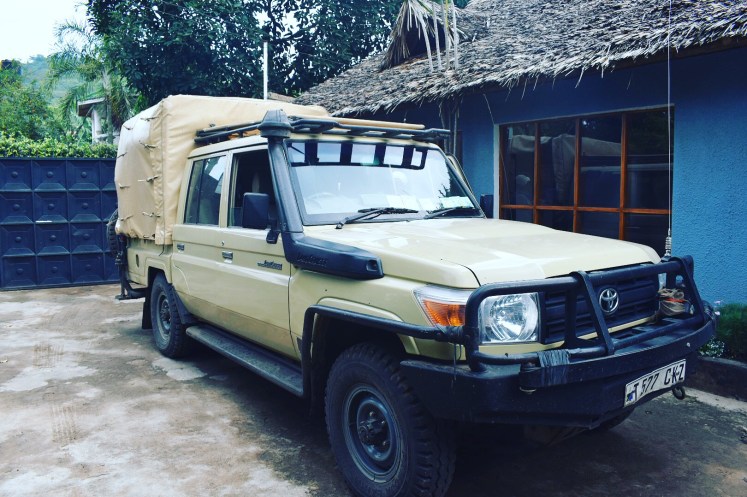
At 8AM we heard the knock of our trip crew arriving. Daudi is our guide and driver. He has been working with Dorobo for eight years. Our cook and camp staff is Kimambo. He has been with Dorobo for almost 20 years. Daudi speaks impeccable English and spent much of the day telling us about the landscape, plants, and people we came across. Kimambo speaks only a little English, but he is very friendly. He sat in the back seat with me and was very diligent to make sure I didn’t lose my seat cushion out the door every time I left the vehicle. I wish I knew Swahili to include him in my conversation sphere.

On our way out of Arusha, Daudi took Melissa and I to a money exchange. We couldn’t change at the airport because they ran out of money. It was a good thing really. The place Daudi took us to had a great exchange rate. And then we set off. Our road trip out involved a pit stop for red bananas (in my opinion superior to the sweet yellow bananas sold in the US), an official tanzanite dealer (where yes, I bought the tiniest cut stone because that stuff is super expensive), samosas, and cookies. By 2pm we were driving through Karatu to our camp on the edge of town.

From Arusha to Karatu, we drove across the western floor of the East African Rift and up and over the large fault escarpment of the western rift boundary. The rift floor is pretty flat and dry, with some extension-induced normal faults. From this vantage, we could see numerous volcanoes that are part of the larger volcanic province including, Mt Meru, Mt Kilimanjaro, and the Ngorongoro Volcanic Highlands. This long-lived activity has taken place from the Miocene to the present.

I fully remember this being the plan, because we wouldn’t have arrived early enough to Ngorongoro if we had kept driving. But all the same we were both a bit dismayed at the day already being over. Karatu has the nickname “Safari Junction,” as most transits into Ngorongoro first overnight here. We also discovered quickly that way more food was allotted for our trip than Melissa and I thought feasible to eat. We enjoyed a large lunch right when arriving. Though we still felt full from all the delicious Tanzanian snacks Daudi and Kimambo had fed us on the drive.

And then we were left to our own devices while they set up camp. This was also a learning moment. Melissa and I both had our own personal walk-in tents with mattressed-cots, blankets, pillow, and towel. Outside each tent was a personal wash water bucket. They even set our bags inside. This camp location even had showers and toilets. We simply were unprepared for this luxury setup, and perplexed when our attempts to aid in any process of cooking, camp setup, cleaning, camp tear down, etc., were almost always turned down. Melissa and I are women of action; neither able to watch others work (especially on our behalf) while idly sitting by. But we appreciated how gratuitously and happily Kimambo and Daudi accomplished any task set about them. We could not have felt more welcome or cared for than in their capable hands.

Once everything was in place, we were introduced to Israel, the camp host. He took Melissa and I on a walk/hike up and around the escarpment to see the farms and Masai family dwellings around Karatu. It was very hot out but we were excited to be out doing something. Upon our return it was already time for another meal. Kimambo’s efforts not unappreciated, we simply felt stuffed to the gills. Kimambo served us a massive and delicious supper and bottle of red wine. I was delighted with the day, however low key it was. Melissa and I don’t make great tourists, so I suspect some of our stops today normally take much longer for people looking to shop and visit every curio storefront.


8A444650-92B8-4AB0-8CBF-1574295C16494E0A1B9C-523A-4A85-AC8D-C53469315E5DA442D0D5-CB1E-48A9-A21B-A9D2B9DE4FD267C78B13-262D-425D-93B3-1D52971EEA40

Onward to Tanzania

1/27/2018
Onward to Tanzania

We woke early to catch our morning flight, both feeling well rested and chipper. The ride back to the airport affording our only real view of the city in the daylight. Despite our bags already in queue, we still had to arrival early. To kill time we made laps about the airport so I could get in my three miles of walking. I will try to continue some semblance of my 30 day-30 minute or 3 mile run/walk challenge. We ended at a bakery for breakfast and leisurely awaited our boarding. Hamad International Airport is like a giant mall more than an airport. You could literally arrive with nothing and fully furnish a wardrobe, toiletries, suitcase, and all the Duty Free you can imagine. It was massive and seemingly insane. There were a multitude of dining options too, and I have no complaints about being lured by the smell of fresh bread baking in the food court.

Our final flight was about 6.5 hours. Again it was a relatively empty plane. Melissa and I shared a row this time. She likes aisle seats, so is a perfect match to my window seat ways. Another meal and unlimited drinks, with snacks as we desired. It was awesome to skirt the Arabian Peninsula around the Persian Gulf and Arabian Sea, across the Gulf of Aden, and over the coastal interior. The massive Arabian Desert below looked like a snow-scape blending into the clouds. The occasional road impossibly straight or burning of a flare stack in the shapeless landscape the only visible evidence of life. It was a grand view for geology. The sweeping desert interior flanked by escarpments along the coasts. A broad mountain-studded plateau revealing black lava beds of long extinct volcanoes, and the many narrow valleys, called wadis, piercing down along its sides. A long narrow coastal plain, betraying its sedimentary deposition in ancient seas. It was beautiful.
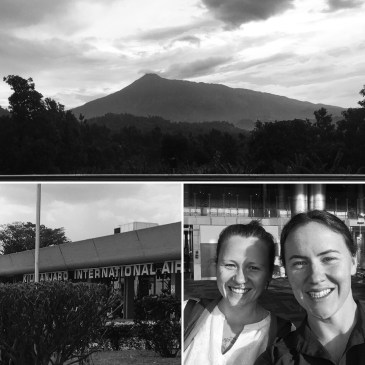
Flying into JRO we could see the rising figure of Mount Meru, Kilimanjaro being on the opposite side of the plane. Meru is a dormant stratovolcano, and Tanzania’s second highest peak at about 4,500 m (15,000 ft). I had momentarily considered a Mt Meru trek in addition to Kilimanjaro, but maybe another trip.
We landed and deplaned into a sticky afternoon heat. After clearing customs our driver was waiting for us with a sign holding our names. I have traveled quite a bit in my life, but never have I been the recipient of a welcoming party. It was nice. He drove us the 50 km into Arusha, where we are staying the night at Penda Safari House. Our friendly host, Kip, or Kipepiarey, yet another friendly face in an already great adventure. He showed us to our room, with two matching poster beds, and left us be before supper. I repacked my bag and nestled down for a quick nap. At 7 PM, Melissa and I wandered out and found Kip and his niece setting a table on the porch for us. It was an amazing feast of wali wa nazi (coconut rice), roti (unleavened flatbread), beef Biryani (tender morsels of steak cubes cooked in a thick spicy gravy), sukuma wiki (collard greens style of amaranth greens, or mchicha), vegetable samosas, cubed pineapple, and apple juice. Despite having not done much today, I was ready for a food coma after that. We tried to help clean up and then retired back to our room.

I am reading The Poisonwood Bible by Barbara Kingsolver right now and read for a while. Melissa and I were nestled down like two dolls in our white meshed beds.


Luxury flying with Qatar Airways

1/26/2018
Luxury flying with Qatar Airways

Our journey is broken into three days. First we travel from UCSB to LAX, and from LAX to Doha, Qatar via a 19 hour flight on Qatar Airways.
My first impression was clouded by having a seat completely soaked by a miscellaneous fluid, a fluid that quickly absorbed itself into my pants. But then we realized that we were going to have whole rows completely to ourselves. I moved to the window, tucked myself in among my supply of pillows and blankets, and was ready for the long haul. Then a flight attendant brought a freshette towel, headphones, and mini toiletry pouch (with an impossibly adorable tiny toothbrush and toothpaste) to aid our journey’s comfort. I discovered quickly we had access to a wide range of interesting movies and television shows for in-flight entertainment. We were served a reasonly delicious supper not long after reaching altitude, a mere 42,000 feet. Much of the flight was a movie marathon between regular offerings of water or juice by the flight attendants. They all seemed so calm and happy to make us comfortable. There was a snack time in there for those awake during the night, for which I was of course binging into my fourth film by then. And toward morning, we received an assorted meal somewhere between breakfast and lunch. My favorite part was that every meal included dessert and ended with a round of tea with milk.

Qatar Airways is advertised as a luxury airline, and Hamad International Airport aims to become the highest rated airport. Our second day ended with a package deal to stay overnight in Doha. We had a 15 hour layover, with no option for an earlier flight, so took the Qatar Airways bargain to get out of the airport a bit. They arranged the entrance Visa, hotel with shuttle, supper voucher, and luggage transfer for an arguably small price of $125.

We stayed at the Oryx Rotana Doha hotel. It is a super modern hotel with several restaurants, including hookah bar and live jazz. We ate at The Cellar for a two course meal with unlimited wine. Unfortunately customs took a long time and then we walked out right as a shuttle left, requiring an additional wait for the next one. Resulting in us having no real amount of time to actually go out and see much of Doha. By the time we ate and showered, I was well past my bedtime. Melissa stepped out a minute for a phone call home and by the time she returned, I had peacefully closed my eyes while propped up in front of the television, wearing a cozy bathrobe. Melissa said I looked like a model for a spa advertisement. At some point I finished crawling the rest of the way into bed. It was an amazing night’s sleep.


The Departure

1/25/2018
The Departure

Today sort of snuck up on me. Since returning from winter break I felt like I had spent every waking moment in the lab. Barely sleeping, barely going home to change clothes. Then across a few short days my mass spectrometer analyses were finished and a new week began. That was this week, and it brought its own sense of hurry as I scurried to organize and pack for a long departure. And just like that, Melissa and I are sitting on a plane, shooting through the sky toward Tanzania.

Clothing in Antarctica

12/16/2016

While preparing for this trip to Antarctica, I was completely lost for what clothes to bring. Normally a few hours filing through the bowels of the internet produces more information than I desired. Antarctica was different. And I didn’t really understand why until having been through the whole experience. The majority of people who come through the U.S. station stay at McMurdo. That means they are in a small village, with heated buildings, unlimited hand and toe warmers, warm and cooked meals three times a day, access to drinking water of a variety of temperatures, access to motorized transportation, and within a very short time from a SAR team.

I was not preparing for that type of experience. I was preparing to spend weeks in the middle of nowhere living in a tent. The activities involving skidoo travel and hiking around. My support team a party of two plus me. There are people going out like we did, but apparently none of them (or few enough that I could not find their blogs) are writing about the clothing situation. So as a service to future field people going to Antarctica, I want to add my thoughts to the internet searching.

The CDC (Clothing Distribution Center) in Christchurch issues a bunch of clothing called the Extreme Cold Weather (ECW) gear. Briefly, the ECW issued to me included:
1x Big Red – the giant red down parka;
1x Little Red – a small wind jacket;
1x polar fleece jacket;
1x coveralls;
1x polar fleece pants;
1x Bunny Boots – insulated rubber boots
1x fleece balaclava
2x fleece neck gaiters
1x polar fleece cap
1x insulated leather work gloves
1x waterproof mittens
1x leather mittens
2x polypropylene gloves
1x Bear Claws – “fur”-backed gloves
1x goggles
2x duffle bags

Everyone receives slightly different allocations depending on where they are going and their expected weather conditions. The items I brought myself are explained further below:

BOOTS and SOCKS.
Per John’s advice, I specifically bought boots for this trip since I needed warmth and the ability to hike in them. I bought La Sportiva Spantiks. And I loved them! They were recommended to me as the boot of choice for Denali climbers. I wore really thin silk sock liners under thick expedition-style wool socks. That combo was perfect. My feet were never cold as long as my feet were not cold already prior to going into the boot or the boot was wet. This was most noticeable on the skidoo rides, when I didn’t have the ability to pump blood back into my feet. Even with the thick socks, one size larger than I would wear without socks in the Spantiks was perfect. While hiking, especially after my socks had been worn awhile, they almost felt loose. But I liked these boots best because the heel is snug, so my feet didn’t move around a lot. It is a double boot, and both boots use a single hand threading system to eliminate the need for tying knots. Occasionally my outer strings would come loose, but I could put them on and tie them up without taking off my gloves. And the inner boot never untied because the strings end at a Velcro attachment so the boot itself didn’t come loose. The Spantiks are considered the warmest boot of their style, especially considering how light they are for an expedition boot. I normally hike in running shoes, so it took me a bit to figure out the difference in balance and foot size, but overall I was extremely happy. I used both the Smartwool and REI brand expedition socks. They are the only thick wool socks of their kind. I didn’t notice a difference in warmth or odor blocking. I do think the REI socks maintained shape better after repeated wears without washings. The downside to both brands is the expense. But as I already alluded to, I wore the same few pairs of socks instead of having an abundance of spares. The silk liners, in fact, did not block odor and I definitely wanted to change them more than I ever felt the need to change the wool socks.

BOTTOMS.
I wore Patagonia wool unders beneath Smartwool midweight thermal pants under waterproof ski pants. The ECW coveralls were more comfortable, but I liked the ski pants better for toilet use (bonus toilet section at end of this post). Plus my coverall straps were not actually long enough and I didn’t like dealing with them. The issues pants would have been sufficient, it was a personal choice to favor the pants. If hanging out at camp in the tent, I would prefer the coveralls because the legs completely unzip, making them a lot faster to slip on for a quick run to the toilet tent, like we had set up at our Gabbro Hills camp. Our Miller Range camp toilet was outside unprotected, so I preferred regular pants for lower skin exposure. The coveralls would have been nicer for skidoo travel because I frequently caught drafts up my back that only windproof layers could protect for. I don’t have a lot to say here. My legs don’t typically become cold, so pants were not an issue for me. I do really love Patagonia’s Barely Bikini wool underwear. It is soft, odor resistant, and durable. I have been a few generations and they are a quality item. I honestly think they are the only wool underwear I would recommend. Most brands have unflattering styles are uncomfortable cuts, in my opinion. Not even Smartwool makes the cut. Their underwear seams break easily and quickly unravel. They aren’t very flexible around the leg holes either, I often chafe in Smartwool unders.

TOPS.
I wore an Athleta Full Focus sport bra beneath a midweight long sleeve top covered with a Patagonia zip up fleece jacket. ECW includes a fleece jacket but I found it too bulky for comfort with all the other layers. Then I would wear a combination of outer layer jackets depending on the weather and activity. For skidoo travel, I liked Big Red best. My biggest issue was pockets. I never had enough pockets. Even with a pack on, I needed quick access to my field journal, Sharpee markers, GPS, and camera. And technically I had a satellite phone on my person too. Sometimes I would then add a hammer and/or chisels. So pickets were my problem. Yes, I could have stored all of that in my pack, constantly taking it off and putting it on. But when you are in -30 degree Farenheit weather before accounting for the wind, the goal every time is efficiency. Rummaging around in a pack is not efficient. I liked tops with thumb holes best. Sometimes I had so many layers on that a lost sleeve meant frozen fingers if I de-gloved to fish it out or a cold arm if I did not. Thumb holes also usually means longer sleeves in general, which I personally really like. I find that REI has really jumped onboard with adding quality thumb holes in their winter tops. Patagonia also does a fine job. I had one top with a slim hood. I do not normally find hoods useful as a hat is always warmer, but I really liked the added neck cover without the bulk of a balaclava. My last advice would be to always tuck in your shirt. As mentioned already, the back draft was wretched. Sometimes the skidoo ride would be so bumpy that I needed my hands to hold on and if my coat came up, a tucked in shirt was my only line of defense from freezing winds cutting through the fleece layers.

I am obviously of the crowd who favor layering over fewer bulkier items. The worst thing was to sweat because literally the moment you stop walking, your damp clothes become cold. This was frustrating when balancing skidoo travel with short hikes up outcrops. It was a constant change between producing no heat and too much heat. Hence my love of Big Red. I could put on a huge jacket for the skidoo ride and then quickly shed a bunch of heat as we started walking. I liked putting Little Red over my own wind shell jacket. Both had a few pockets and Little Red was quite large, so they fit nicely together will stopping the wind without over-insulating me while hiking.

GLOVES.
This is where I struggled most. ECW includes so many gloves, I didn’t really think about needing to prepare here as much as I should have. I brought one pair of two-layer waterproof down gloves. I wore these a lot for skidoo travel. They were too warm when driving because the skidoos have heated handlebars, but they were perfect as passenger. I rarely wore liners with these gloves, they are designed to not need additional liners. I ended up wearing the polypropylene gloves as my liners for the leather work gloves. That wasn’t quite warm enough, especially once my leather gloves gained holes. Part of the problem was not having gloves that fit well. The leather gloves either had too slim of fingers to fit liners under or the fingers were way too long. I needed to be able to go from the padded protection and dexterity of a work glove for hammering rocks to extra dexterity for taking field notes and pushing GPS buttons. I do not think that I accomplished an appropriate glove setup, so I will stop here. I also had a weird numb hand problem that compounded that problem.

HATS and NECK GAITERS.
I mostly wore fleece-lined knit hat of my own. While on the skidoo, I would put on another hat that has ear flaps. When sleeping I wore a thin wool Ice Breakers beanie. The ECW included two fleece neck gaiters, but I found them coarse and for some reason they would frost over really quickly. I bought a silky to the touch fleece gaiter in McMurdo. I liked it best. I wish it had been longer though, so I could have pulled it up over my nose without exposing the bottom of my neck. That said, I still preference it over the issued ones which were longer. I brought wool gaiters with me that I normally like for skiing, but I never wore them. I think they would have frosted too quickly.

It isn’t much, but maybe someone will get some tips from this. The last section is mostly on female toilet advice.

PEE-AID DEVICE.
I am told females are normally issued pee funnels and given a run down on female hygiene. This was not done for me or even mentioned, so my advice is my own and likely does not reflect the habits of other females in Antarctica. I have a device called the P-Style. It looks like a scoop spoon. Most female pee aids are funnels, but I am not a fan for several reasons. The biggest reason is that when I am cold and need to pee, the last thing I want to do after stuffing a frozen plastic funnel against my lady parts is have to hold back the force with which my bladder wants to evacuate. It is also unsatisfying to not just let it all out. I find funnels limiting in this regard because they can only drain at a maximum rate. An open sided device like mine, however, will simply flow faster since the fluid is only restricted on three sides. This in fact leads to the second selling point for me, I only have to worry about positioning the device far enough back, rather than pay attention to both the backward and forward positions. Maybe other females don’t find that to be a problem, but I often started peeing without feeling 100% confident that the device was in the correct place. The reason you want a simplified design, in my opinion, is because it was bloody cold. Every task, no matter how basic, it a challenge when it requires the exposure of skin at -40 degrees Fahrenheit. This is one reason I preferences pants over coveralls. I could pull down the pants just far enough to gain access to my thermals and then shove the P-Style in place and the solid plastic kept the waist band pushed out of the way. All I had to do was sort of dip my hips down forward so the device could drain down. One brilliant gear item in Antarctica is a pee bottle. It is a white Nalgene with blue lid and big yellow sticker. As long as I was peeing into a bottle, I could expose the least amount of skin while peeing. I even mastered peeing into the bottle while kneeling in my sleeping bag. A big challenge for funnels is that you not only need to keep the whole top flush with your skin to prevent gaps, you also have to allow for the angle of the funnel spout at the bottom. The only design change I would make is either slightly taller side walls or maybe a tiny ridge around the top. With gloves on I didn’t have much leverage to hold the device without having at least one finger pressing down the top to keep my grip. I very nearly pressed that finger down into the pee flow on more than a few occasions. Other than that, it is brilliant. And very easy to clean since it’s a single shape with no connecting points. And there is the option for a little canvas pouch to store it in. Mine has octopuses on it.

Safe passage

12/14/2016

With many activities that I partake in, there is a certain challenge in describing my motivations. For me the answer can always be summed up by “Why not?” Many people require more of something to wrap their head around such logic. Coming to Antarctica, however, I feel like few people asked that question. Maybe I have finally broken through the need for explanation on why I choose the things I do? I actually think it is something different. I have seen it in people’s faces at McMurdo too. We are in Antarctica. This is truly one of the last places on the planet that cannot be freely traveled by anyone with the ambition. And even those who do make it down, I suspect most are restricted by how that access was gained. Though there are those rare expeditions and Vinson Massif summit teams, few people get to really experience the sights of Antarctica. One group of people may have found a way. They are the flight teams from Kenn Borek Air, the U.S. Air Force, and the Royal New Zealand Air Force. And I owe a lot of gratitude to many of these people for my safe transport around the continent. Thank you!

To give a brief glimpse into my flight experiences, and maybe spread a thought of support for these incredible people, I want to tell my flight experiences and show the different aircraft I was privileged to be a passenger in while in Antarctica.

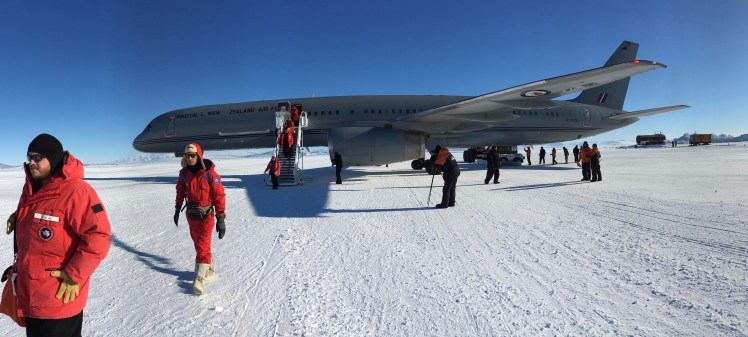
My flight from Christchurch to McMurdo was on a Boeing 757-200 flown by the Royal New Zealand Air Force No. 40 Squadron. Maybe it is becoming more common for these large commercial aircraft to land on the continent, but I felt like I was experiencing a rare opportunity. It was a luxury flight compared to standard flights to Antarctica. We had cushioned seats, windows, the quiet interior of a commercial plane, and they packed us a sack lunch. It was fantastic!

RNZAF Boeing 757
RNZAF Boeing 757

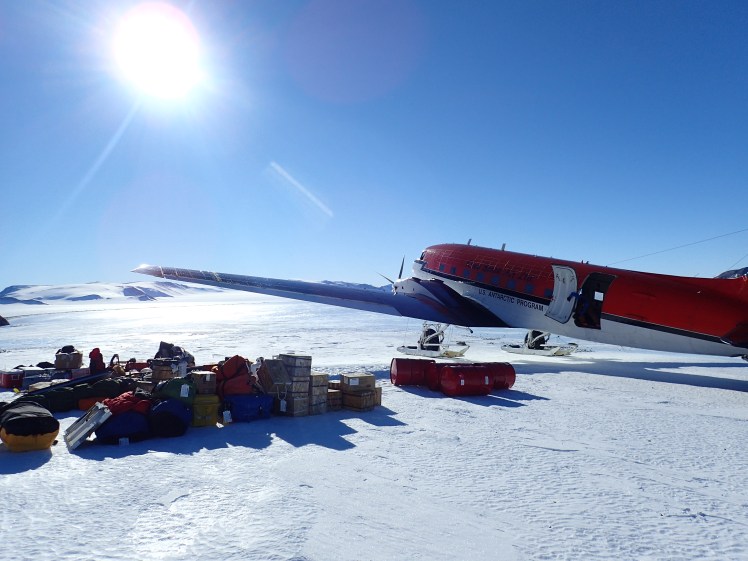
My flight into the Miller Range was on a Basler BT-67 (Turbine DC-3) aircraft. There were three crew members. They have a payload limit of 8,500 pounds (including fuel weight), so are the primary cargo hauler for field teams and fuel drops. It was a beautiful day and the crew were all incredibly nice. Kenn Borek Air is based out of Canada, so the pilots are all Canadian bush pilots. My personal experience is that they are all wonderful and interesting people.

KBA Basler BT-67 (Turbine DC-3)

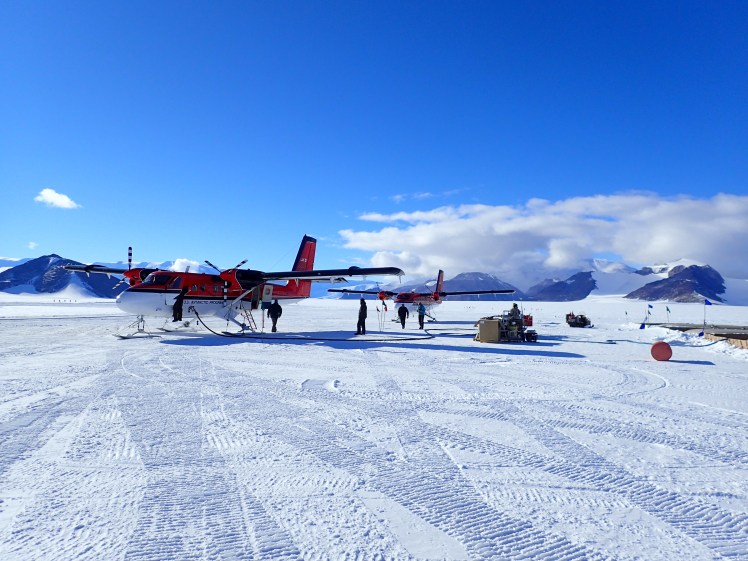
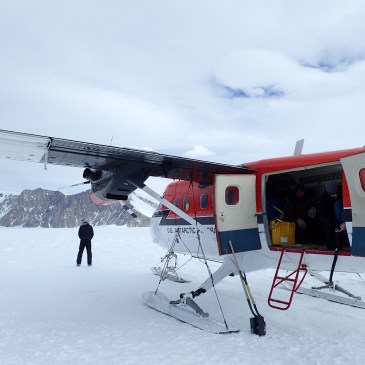
Shuttles from Miller Range to Shackleton Camp, Shackleton Camp to Gabbro Hills, and Gabbro Hills to Shackleton Camp where all through the efforts of the crews flying Twin Otters (DHC6). These are smaller planes (3,500 lb payload) on skis. They are the nimble flyers for Antarctic missions. They provide a lot of support for science teams because they have the ability to land and takeoff on a wide range of unprepared landing surfaces on sea ice and glaciers and seawater.

Twin Otters (DHC6)
Twin Otters (DHC6)

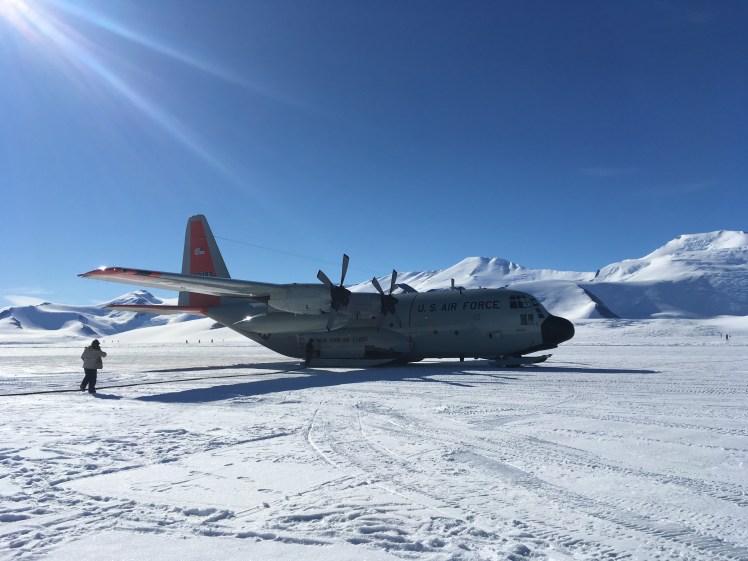
Returning from Shackleton to McMurdo, we flew with our cargo on an LC-130, a ski-equipped version of the U.S. Air Force C-130 Hercules operated by the New York Air National Guard (recent article here). This is a monster of a plane. It was designed for combat transport and has a hinged loading ramp at the rear of the fuselage to dump out cargo by the pallet load.

U.S. Air Force LC-130

It’s over just like that

12/12/2016

We are back in McMurdo and the process happened quite quickly. On the 10th, it only took three Twin Otter flights to move back to Shackleton Camp. I am beginning to think of Shackleton as the resort of Antarctica, a peaceful and secluded place with all the desired amenities (though lacking WiFi). We had two overnights to re-pack bags, palletize our cargo, shower (with soap this time!), and decompress after coming out of the field. Today we loaded onto an LC-130 and arrived at McMurdo this afternoon. The whole trip seems like a blur. But just like that, the whole season is over, and we are preparing for our departure off of this continent. The end of one adventure always leads into another, but I cannot help feeling a more solid finality for this one. I do not know if I will ever return to this place. I do not foresee my return right now. Though I am also not one to set my future in stone.

Coming to a close

12/9/2016

Yesterday we decommissioned one of the skidoos. Since we are unable to leave the immediate area around camp, we used the one working skidoo to shuttle to the bottom of the ridge overlooking camp and changed our agenda to a hiking mission. The goal had been to skidoo all the way around the outer ridge, sampling along the way. Instead we hiked straight to the top of the nearest peak. We did not cover as much exposure as we would have liked, but we probably accessed better rocks than we would have had access to from below.

Looking out, we had the best views of all of Lillie Range. It was mesmerizing. Unfortunately the Prince Olav Mountains were cloud covered. What a life we lead. We may be the only people to ever climb that peak. It was a rare and peaceful moment. As we hiked back to the skidoo with our packed weighed down with rocks, I felt like I was on another planet, stumbling around an unknown Martian paradise.

Today is our last day in Gabbro Hills. The weather was beautiful today, but with only one skidoo there was nowhere we could go. We are mostly packed up and ready for our flights tomorrow. We are headed back to Shackleton Camp and then to McMurdo.