Herbert to Milton – 94 miles

12/22/2016
Herbert to Milton – 94 miles

I slept so well last night! Not a hard sleep, just rejuvenating. It looked like clouds were stirring this morning so I didn’t waste time hitting the road. I rode 31 miles to Waikouaiti where I stopped for coffee and a scone. My bum appreciates the breaks I have been taking every two hours, especially when it involves a soft padded chair. It also helps break up the day. Let’s me aim for shorter 20-30 mile segments instead of thinking about the whole day’s distance. The highway is easy to follow so I only pull out the map during breaks to make sure I am not dallying too slowly. Waikouaiti was my goal for last night. Had I made more miles the first day, I think I definitely would have made it.

What a brutal day so far. That big climb turned out to be a series of increasing climbs, 25 miles of them. Then, at the top of the last climb, when I was just handful of miles away, I saw a sign depicting that the road was closed to bicycles. I just rode up a beastly climb (not Gibraltar Road beastly but arduous all the same) and then was directed to a side road for the descent. Any cyclist will tell you that pedaling your ass off to get to the top of a hill is worth it because of the victorious downhill on the other side, where you just need to hold on for dear life and let gravity bring you down. Instead, I was siphoned off on a 3 mile downhill gravel road. Joy. It was very pleasant once I finally hit the pavement. Very few cars overall. Though I cannot help thinking about this climb for my return trip. What a dreadful day that will be.

Despite my bickering about topography, today has hands down been the most beautiful. All morning had the cool calmness that rain clouds have a way of causing. I rode up on a sleepy lake with black swans and a single white swan. So lovely. Then I immediately encountered the coast and actually rode along the wave crashing bluffs for awhile. Following my morning break is when the hills started up, but the views were stunning. So much green! Maybe I am easily impressed right now, I mean I did just return from the desolate Antarctic mountains, but the rolling hills and trees swaying in the wind. I have loved every view today. And the sheep have been particularly entertaining. They don’t even look up for a noisy semi truck, but my riding by has the power to send them running. I have been amusing myself With whistling and singing out once I am close to a flock of sheep on alert. They do not find it funny. My new goal is to get a whole mob of sheep running for their lives.

I spoke too soon about Dunedin. Officially my least favorite place so far. On top of a long rain delay, the highway turns into a motorway heading south out of town. Instead of 8 miles along the motorway, I had to turn back into the city and take a ridiculous path that involved a winding 12 miles with three unnecessary big climbs in the pouring rain on roads with minimal shoulders. I should have grabbed fast food and hit the road right away. After about two hours in the rain, I stubbornly just kept moving.

I did see an incredible sight this afternoon, a herd of one hundred or more deer! No exaggeration . I have never seen so many deer in one place. They were just helping themselves to the grassy grove in a field of grain. It was crazy. I also have a new success on the startling of farm animals. I coerced a tiny horse to run along with me for the whole duration of its field, maybe 300 meters long. I was so delighted!

In total I rode another 38 miles to Milton. I was pretty over cycling when I arrived there. My feet had been cold and wet for hours, the air felt cold because my bike shorts were still mostly wet, and then the sun finally decided to come out again just in time to start setting. I needed a morale booster and supper was the ticket. I ate a huge meal of pork belly, mash potatoes, roasted vegetables, red cabbage salad, and chocolate cake with cream and ice cream at the Fork n the Road restaurant. Yes, that brought me back to happiness. I am 16 miles short of my intended mileage, but it was late and I was ready to stop moving. I am staying at the Happy Inn Backpackers. It is a quiet hostel with a cheap, warm bed and shower. Somewhere dry to hang my clothes. It is just what I needed. And the owner is a friendly German-Swiss man who taught me to juggle. Seriously, I had three bean bags up to 8 or 9 turn-overs before losing a bag. I feel like I need to expand this skill. I am now on the lookout for a set of six bean bags. A career at the carnival may be in my future yet!

Ashburton to Herbert – 115 miles

12/21/2016
Ashburton to Herbert – 115 miles

Today felt long. I am glad to be snuggled down for bed right now. I had a better start time today, though I am thinking maybe I should hit the road earlier to avoid late afternoon. The is the side of me that’s burned and the heat really feels brutal without shade.

To keep my panniers as light as possible, I am not really carrying any food. I have a bunch of snicker bars and banana chips for snacking. I have been buying breakfast from the grocery the night before. Then lunch and supper are eating out. I feel like this is the optimal way to make sure I am appropriately fed as measured by quality and healthiness over quantity.

I rode a solid 42 miles before stopping to lunch at Bernie’s Bakery HQ in Timaru. Late afternoon I stopped at the lone cafe marking the turn onto SH82 off from SH1 leading to Waimate. Unfortunately their water tank has just broken, so I settled on a cold ginger beer then set back out.

The views been quite pleasant today. I saw the ocean a few hundred meters from the road. The was the closest the road came, but I caught views off and on all day. Beautiful. And peaceful. I had light head winds all day, so I am blaming that for moving so slowly today. Though I am also fighting through some major saddle soreness. I could see the mountains all day! This was a great thing, but briefly around Temuka and continuously passed Oamaru those beautiful mountains turned into a lot of ups and downs. The owner from last night’s campground told me the way was flat until just before Dunedin, so I am definitely not looking forward to hills for tomorrow.

Sights also included lots of farms, sheep, tiny horses, cows, llamas, and, strangely, an abundance of broken bungee cords on the side of the road. Very little roadside litter, but I consistently see broken bungee cables in addition to dead birds and squished (quilled rodent). I saw a sign for wallabies, but I am not I will see any.

After my cold drink break, I rode 31 miles to Oamaru, the steampunk capital in New Zealand, and supped at Cucina Restaurant & Bar. Very high class. I picked the place because I could watch my bike through the window. Fortunately 6pm is somewhat early for the supper crowd so they didn’t scoff at my sunblock glistening legs covered in spattered bugs. I had a lovely meal, but it felt a bit dainty, so I stopped by the grocery and scarfed down a pint of Tip Top’s brand “Saucy Caramel.” Just what my sweet tooth wanted!

I contemplated staying in Oamaru, but my map app led me to think if I got those last 16 miles in, I would be perfectly set up for a 90 mile day tomorrow. Having looked at the numbers in actuality, I am 151 miles from the desired stop. Instead I am going to stop sooner. There is supposed to be a gnarly climb tomorrow! Anyway, I rode 16 miles more to Herbert Forest Camping Ground in the tiny town of Herbert. $12.50 NZD provided me a completely empty upper campground (I missed the main camp somehow), a hot shower (though brilliantly I left my shampoo in the shower last night), and a kitchen. I even plugged my phone in for a charge. New Zealand is incredibly camp friendly!

Christchurch to Ashburton – 58 miles

12/20/2016
Christchurch to Ashburton – 58 miles

Yesterday we arrived safely at Christchurch in the LC130. Demian and I collected our bags and headed for the hotel. They booked us at the Sudima Hotel, across the street from the CDC. Perfect distance! I think I literally slept most of the 8 hour flight back to New Zealand. LC130’s are loud and our flight was full. So piled in like sardines, shoulder-to-shoulder and knees-across-knees, I tried my best curl up on my mesh space and slept hard. Despite that nap, I was feeling pretty worn out still. At the hotel, I emptied my bags on the floor, changed into a dress, and watched movies while I attempted to pack and sort out my bike trip items. When I could no longer hold off hunger, I went and found Demian. We walked over to Little India for supper. I stopped at the grocery to buy razors, a pint of ice cream, and snacks for my trip. My legs haven’t seen daylight or a shave for over two months now. It was time. Anyways, this morning I had ambitions for an early start on my cycling trip. Instead I arrived at the CDC to drop off my bags and received the message that travel needed to see me. They needed to push my flights a day later and then actually book them. I sat waiting until just after 1PM. So much for a strong first day. I road straight through all afternoon until stopping for supper at Robbie’s Bar & Bistro in Ashburton. I looked at my distances and decided to stop for the day at Tinwald Camping Ground in Ashburton. It is a lovely place, and the owner is quite friendly and encouraging about my trip. For $16 NZD I have a camp site, shower, outlets, and TV room. After a quick shower I retired to the TV room where I am watching National Treasure with Nicholas Cage and charging my battery. My goal is to sleep early and hit the road early tomorrow. Day one done. My pelvis feels bruised, my quads are tight, my hands are still numb, and in my typical style, I am sunburned. About 300 miles to go!

Clothing in Antarctica

12/16/2016

While preparing for this trip to Antarctica, I was completely lost for what clothes to bring. Normally a few hours filing through the bowels of the internet produces more information than I desired. Antarctica was different. And I didn’t really understand why until having been through the whole experience. The majority of people who come through the U.S. station stay at McMurdo. That means they are in a small village, with heated buildings, unlimited hand and toe warmers, warm and cooked meals three times a day, access to drinking water of a variety of temperatures, access to motorized transportation, and within a very short time from a SAR team.

I was not preparing for that type of experience. I was preparing to spend weeks in the middle of nowhere living in a tent. The activities involving skidoo travel and hiking around. My support team a party of two plus me. There are people going out like we did, but apparently none of them (or few enough that I could not find their blogs) are writing about the clothing situation. So as a service to future field people going to Antarctica, I want to add my thoughts to the internet searching.

The CDC (Clothing Distribution Center) in Christchurch issues a bunch of clothing called the Extreme Cold Weather (ECW) gear. Briefly, the ECW issued to me included:
1x Big Red – the giant red down parka;
1x Little Red – a small wind jacket;
1x polar fleece jacket;
1x coveralls;
1x polar fleece pants;
1x Bunny Boots – insulated rubber boots
1x fleece balaclava
2x fleece neck gaiters
1x polar fleece cap
1x insulated leather work gloves
1x waterproof mittens
1x leather mittens
2x polypropylene gloves
1x Bear Claws – “fur”-backed gloves
1x goggles
2x duffle bags

Everyone receives slightly different allocations depending on where they are going and their expected weather conditions. The items I brought myself are explained further below:

BOOTS and SOCKS.
Per John’s advice, I specifically bought boots for this trip since I needed warmth and the ability to hike in them. I bought La Sportiva Spantiks. And I loved them! They were recommended to me as the boot of choice for Denali climbers. I wore really thin silk sock liners under thick expedition-style wool socks. That combo was perfect. My feet were never cold as long as my feet were not cold already prior to going into the boot or the boot was wet. This was most noticeable on the skidoo rides, when I didn’t have the ability to pump blood back into my feet. Even with the thick socks, one size larger than I would wear without socks in the Spantiks was perfect. While hiking, especially after my socks had been worn awhile, they almost felt loose. But I liked these boots best because the heel is snug, so my feet didn’t move around a lot. It is a double boot, and both boots use a single hand threading system to eliminate the need for tying knots. Occasionally my outer strings would come loose, but I could put them on and tie them up without taking off my gloves. And the inner boot never untied because the strings end at a Velcro attachment so the boot itself didn’t come loose. The Spantiks are considered the warmest boot of their style, especially considering how light they are for an expedition boot. I normally hike in running shoes, so it took me a bit to figure out the difference in balance and foot size, but overall I was extremely happy. I used both the Smartwool and REI brand expedition socks. They are the only thick wool socks of their kind. I didn’t notice a difference in warmth or odor blocking. I do think the REI socks maintained shape better after repeated wears without washings. The downside to both brands is the expense. But as I already alluded to, I wore the same few pairs of socks instead of having an abundance of spares. The silk liners, in fact, did not block odor and I definitely wanted to change them more than I ever felt the need to change the wool socks.

BOTTOMS.
I wore Patagonia wool unders beneath Smartwool midweight thermal pants under waterproof ski pants. The ECW coveralls were more comfortable, but I liked the ski pants better for toilet use (bonus toilet section at end of this post). Plus my coverall straps were not actually long enough and I didn’t like dealing with them. The issues pants would have been sufficient, it was a personal choice to favor the pants. If hanging out at camp in the tent, I would prefer the coveralls because the legs completely unzip, making them a lot faster to slip on for a quick run to the toilet tent, like we had set up at our Gabbro Hills camp. Our Miller Range camp toilet was outside unprotected, so I preferred regular pants for lower skin exposure. The coveralls would have been nicer for skidoo travel because I frequently caught drafts up my back that only windproof layers could protect for. I don’t have a lot to say here. My legs don’t typically become cold, so pants were not an issue for me. I do really love Patagonia’s Barely Bikini wool underwear. It is soft, odor resistant, and durable. I have been a few generations and they are a quality item. I honestly think they are the only wool underwear I would recommend. Most brands have unflattering styles are uncomfortable cuts, in my opinion. Not even Smartwool makes the cut. Their underwear seams break easily and quickly unravel. They aren’t very flexible around the leg holes either, I often chafe in Smartwool unders.

TOPS.
I wore an Athleta Full Focus sport bra beneath a midweight long sleeve top covered with a Patagonia zip up fleece jacket. ECW includes a fleece jacket but I found it too bulky for comfort with all the other layers. Then I would wear a combination of outer layer jackets depending on the weather and activity. For skidoo travel, I liked Big Red best. My biggest issue was pockets. I never had enough pockets. Even with a pack on, I needed quick access to my field journal, Sharpee markers, GPS, and camera. And technically I had a satellite phone on my person too. Sometimes I would then add a hammer and/or chisels. So pickets were my problem. Yes, I could have stored all of that in my pack, constantly taking it off and putting it on. But when you are in -30 degree Farenheit weather before accounting for the wind, the goal every time is efficiency. Rummaging around in a pack is not efficient. I liked tops with thumb holes best. Sometimes I had so many layers on that a lost sleeve meant frozen fingers if I de-gloved to fish it out or a cold arm if I did not. Thumb holes also usually means longer sleeves in general, which I personally really like. I find that REI has really jumped onboard with adding quality thumb holes in their winter tops. Patagonia also does a fine job. I had one top with a slim hood. I do not normally find hoods useful as a hat is always warmer, but I really liked the added neck cover without the bulk of a balaclava. My last advice would be to always tuck in your shirt. As mentioned already, the back draft was wretched. Sometimes the skidoo ride would be so bumpy that I needed my hands to hold on and if my coat came up, a tucked in shirt was my only line of defense from freezing winds cutting through the fleece layers.

I am obviously of the crowd who favor layering over fewer bulkier items. The worst thing was to sweat because literally the moment you stop walking, your damp clothes become cold. This was frustrating when balancing skidoo travel with short hikes up outcrops. It was a constant change between producing no heat and too much heat. Hence my love of Big Red. I could put on a huge jacket for the skidoo ride and then quickly shed a bunch of heat as we started walking. I liked putting Little Red over my own wind shell jacket. Both had a few pockets and Little Red was quite large, so they fit nicely together will stopping the wind without over-insulating me while hiking.

GLOVES.
This is where I struggled most. ECW includes so many gloves, I didn’t really think about needing to prepare here as much as I should have. I brought one pair of two-layer waterproof down gloves. I wore these a lot for skidoo travel. They were too warm when driving because the skidoos have heated handlebars, but they were perfect as passenger. I rarely wore liners with these gloves, they are designed to not need additional liners. I ended up wearing the polypropylene gloves as my liners for the leather work gloves. That wasn’t quite warm enough, especially once my leather gloves gained holes. Part of the problem was not having gloves that fit well. The leather gloves either had too slim of fingers to fit liners under or the fingers were way too long. I needed to be able to go from the padded protection and dexterity of a work glove for hammering rocks to extra dexterity for taking field notes and pushing GPS buttons. I do not think that I accomplished an appropriate glove setup, so I will stop here. I also had a weird numb hand problem that compounded that problem.

HATS and NECK GAITERS.
I mostly wore fleece-lined knit hat of my own. While on the skidoo, I would put on another hat that has ear flaps. When sleeping I wore a thin wool Ice Breakers beanie. The ECW included two fleece neck gaiters, but I found them coarse and for some reason they would frost over really quickly. I bought a silky to the touch fleece gaiter in McMurdo. I liked it best. I wish it had been longer though, so I could have pulled it up over my nose without exposing the bottom of my neck. That said, I still preference it over the issued ones which were longer. I brought wool gaiters with me that I normally like for skiing, but I never wore them. I think they would have frosted too quickly.

It isn’t much, but maybe someone will get some tips from this. The last section is mostly on female toilet advice.

PEE-AID DEVICE.
I am told females are normally issued pee funnels and given a run down on female hygiene. This was not done for me or even mentioned, so my advice is my own and likely does not reflect the habits of other females in Antarctica. I have a device called the P-Style. It looks like a scoop spoon. Most female pee aids are funnels, but I am not a fan for several reasons. The biggest reason is that when I am cold and need to pee, the last thing I want to do after stuffing a frozen plastic funnel against my lady parts is have to hold back the force with which my bladder wants to evacuate. It is also unsatisfying to not just let it all out. I find funnels limiting in this regard because they can only drain at a maximum rate. An open sided device like mine, however, will simply flow faster since the fluid is only restricted on three sides. This in fact leads to the second selling point for me, I only have to worry about positioning the device far enough back, rather than pay attention to both the backward and forward positions. Maybe other females don’t find that to be a problem, but I often started peeing without feeling 100% confident that the device was in the correct place. The reason you want a simplified design, in my opinion, is because it was bloody cold. Every task, no matter how basic, it a challenge when it requires the exposure of skin at -40 degrees Fahrenheit. This is one reason I preferences pants over coveralls. I could pull down the pants just far enough to gain access to my thermals and then shove the P-Style in place and the solid plastic kept the waist band pushed out of the way. All I had to do was sort of dip my hips down forward so the device could drain down. One brilliant gear item in Antarctica is a pee bottle. It is a white Nalgene with blue lid and big yellow sticker. As long as I was peeing into a bottle, I could expose the least amount of skin while peeing. I even mastered peeing into the bottle while kneeling in my sleeping bag. A big challenge for funnels is that you not only need to keep the whole top flush with your skin to prevent gaps, you also have to allow for the angle of the funnel spout at the bottom. The only design change I would make is either slightly taller side walls or maybe a tiny ridge around the top. With gloves on I didn’t have much leverage to hold the device without having at least one finger pressing down the top to keep my grip. I very nearly pressed that finger down into the pee flow on more than a few occasions. Other than that, it is brilliant. And very easy to clean since it’s a single shape with no connecting points. And there is the option for a little canvas pouch to store it in. Mine has octopuses on it.
Safe passage

12/14/2016

With many activities that I partake in, there is a certain challenge in describing my motivations. For me the answer can always be summed up by “Why not?” Many people require more of something to wrap their head around such logic. Coming to Antarctica, however, I feel like few people asked that question. Maybe I have finally broken through the need for explanation on why I choose the things I do? I actually think it is something different. I have seen it in people’s faces at McMurdo too. We are in Antarctica. This is truly one of the last places on the planet that cannot be freely traveled by anyone with the ambition. And even those who do make it down, I suspect most are restricted by how that access was gained. Though there are those rare expeditions and Vinson Massif summit teams, few people get to really experience the sights of Antarctica. One group of people may have found a way. They are the flight teams from Kenn Borek Air, the U.S. Air Force, and the Royal New Zealand Air Force. And I owe a lot of gratitude to many of these people for my safe transport around the continent. Thank you!

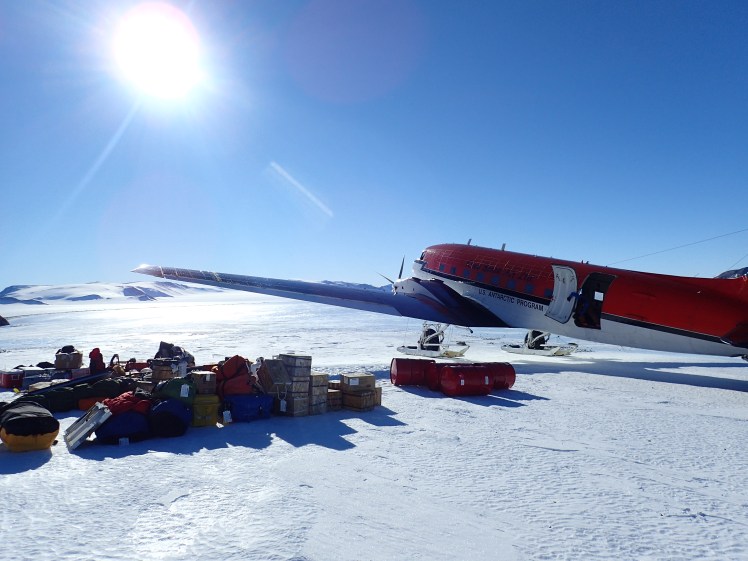
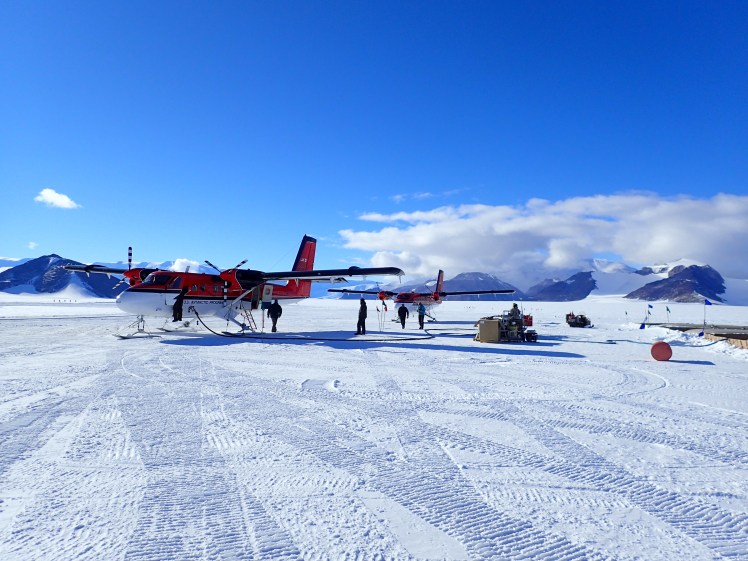
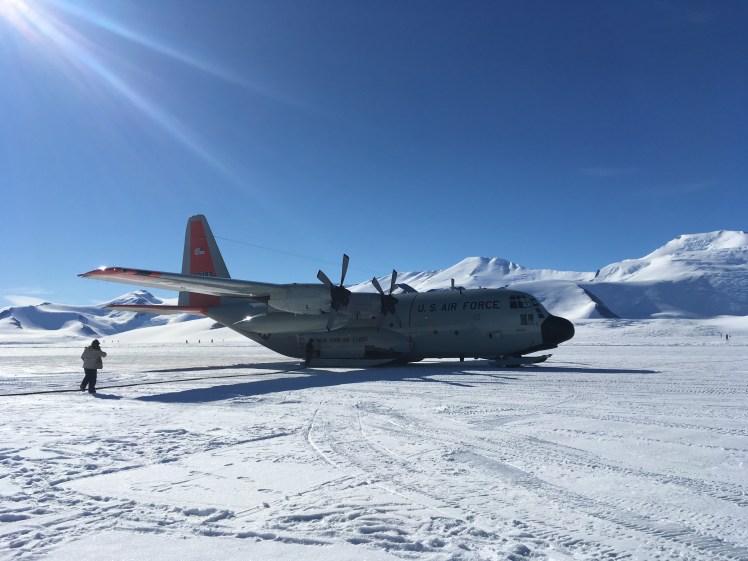
To give a brief glimpse into my flight experiences, and maybe spread a thought of support for these incredible people, I want to tell my flight experiences and show the different aircraft I was privileged to be a passenger in while in Antarctica.

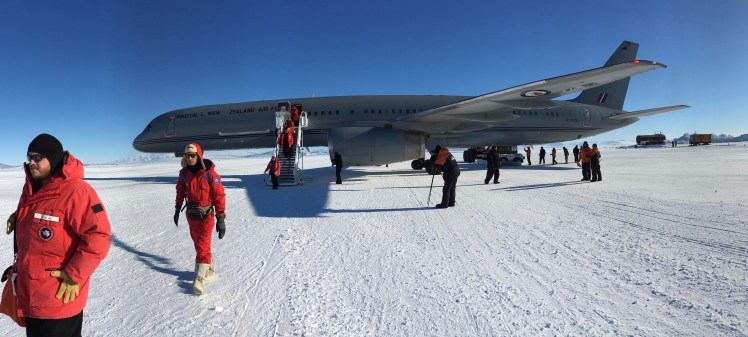
My flight from Christchurch to McMurdo was on a Boeing 757-200 flown by the Royal New Zealand Air Force No. 40 Squadron. Maybe it is becoming more common for these large commercial aircraft to land on the continent, but I felt like I was experiencing a rare opportunity. It was a luxury flight compared to standard flights to Antarctica. We had cushioned seats, windows, the quiet interior of a commercial plane, and they packed us a sack lunch. It was fantastic!

RNZAF Boeing 757
RNZAF Boeing 757

My flight into the Miller Range was on a Basler BT-67 (Turbine DC-3) aircraft. There were three crew members. They have a payload limit of 8,500 pounds (including fuel weight), so are the primary cargo hauler for field teams and fuel drops. It was a beautiful day and the crew were all incredibly nice. Kenn Borek Air is based out of Canada, so the pilots are all Canadian bush pilots. My personal experience is that they are all wonderful and interesting people.

KBA Basler BT-67 (Turbine DC-3)

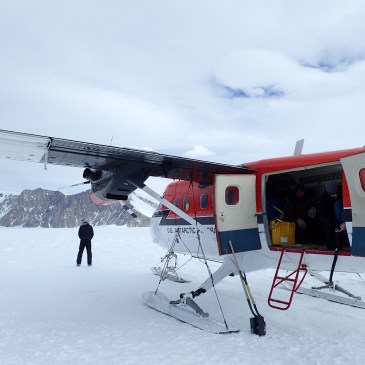
Shuttles from Miller Range to Shackleton Camp, Shackleton Camp to Gabbro Hills, and Gabbro Hills to Shackleton Camp where all through the efforts of the crews flying Twin Otters (DHC6). These are smaller planes (3,500 lb payload) on skis. They are the nimble flyers for Antarctic missions. They provide a lot of support for science teams because they have the ability to land and takeoff on a wide range of unprepared landing surfaces on sea ice and glaciers and seawater.

Twin Otters (DHC6)
Twin Otters (DHC6)

Returning from Shackleton to McMurdo, we flew with our cargo on an LC-130, a ski-equipped version of the U.S. Air Force C-130 Hercules operated by the New York Air National Guard (recent article here). This is a monster of a plane. It was designed for combat transport and has a hinged loading ramp at the rear of the fuselage to dump out cargo by the pallet load.

U.S. Air Force LC-130

It’s over just like that

12/12/2016

We are back in McMurdo and the process happened quite quickly. On the 10th, it only took three Twin Otter flights to move back to Shackleton Camp. I am beginning to think of Shackleton as the resort of Antarctica, a peaceful and secluded place with all the desired amenities (though lacking WiFi). We had two overnights to re-pack bags, palletize our cargo, shower (with soap this time!), and decompress after coming out of the field. Today we loaded onto an LC-130 and arrived at McMurdo this afternoon. The whole trip seems like a blur. But just like that, the whole season is over, and we are preparing for our departure off of this continent. The end of one adventure always leads into another, but I cannot help feeling a more solid finality for this one. I do not know if I will ever return to this place. I do not foresee my return right now. Though I am also not one to set my future in stone.

Coming to a close

12/9/2016

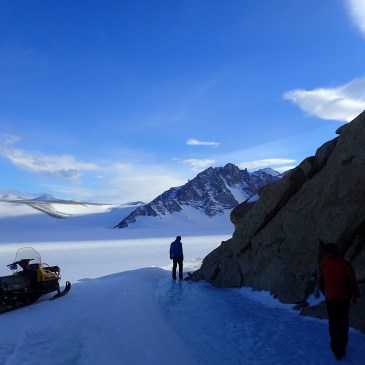
Yesterday we decommissioned one of the skidoos. Since we are unable to leave the immediate area around camp, we used the one working skidoo to shuttle to the bottom of the ridge overlooking camp and changed our agenda to a hiking mission. The goal had been to skidoo all the way around the outer ridge, sampling along the way. Instead we hiked straight to the top of the nearest peak. We did not cover as much exposure as we would have liked, but we probably accessed better rocks than we would have had access to from below.

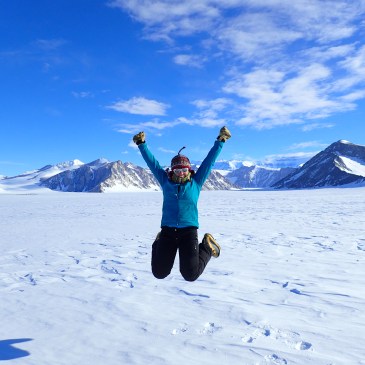
Looking out, we had the best views of all of Lillie Range. It was mesmerizing. Unfortunately the Prince Olav Mountains were cloud covered. What a life we lead. We may be the only people to ever climb that peak. It was a rare and peaceful moment. As we hiked back to the skidoo with our packed weighed down with rocks, I felt like I was on another planet, stumbling around an unknown Martian paradise.

Today is our last day in Gabbro Hills. The weather was beautiful today, but with only one skidoo there was nowhere we could go. We are mostly packed up and ready for our flights tomorrow. We are headed back to Shackleton Camp and then to McMurdo.

Demian’s breakout role

12/7/2016

Today was an interesting day. We had a slight delay as I worked with Fixed Wing to coordinate the camp pull out. When we finally walked out to the skidoos, neither one would start. Both skidoos were dead. We went through the skidoo troubleshooting guide to try to solve the problem ourselves. Having already tried our hands as skidoo mechanics, we felt confident that we could figure out the problem (see post from 11/14/16). Nothing was working. We changed the spark plugs, checked for leaks, checked the filters, pressurized the carburetor lines, and drained the fuel lines and carburetor. After checking all the things on our end, Evan called Tony at the MEC for further advice. We had already speculated that the problem was fuel related, hence draining the fuel lines. After going through all the symptoms again with Tony, he thought maybe we had a MOGAS barrel instead of PREMIX. We sent Demian out to check the barrels at the fuel cache. This was a priceless moment. Even was talking with Tony, Tony detailing a lot of complex information over the phone. Suddenly we heard Demian shout out while running back to the tent, “Problem solved! Problem solved!” He ripped open the tent door as Evan quietly asked, “Is it MOGAS?” Demian interjected, “Aviation fuel” with a matter-of-fact head shake. “No kidding?” pipes in Evan. Another head shake from Demian, “Aviation fuel.” Demian zipped up the tent door as Evan turned back to his conversation with Tony, “That’s really bad.” Did I mention that I caught the whole scene on video? I cannot describe how many times we replayed this scene. It is a combination of ridiculousness and amazement that two skidoos have been running on aviation fuel for the last week.

The absurdity of the aviation fuel discovery was added to with us deciding to get in a full day of sampling still. We left camp right at 5PM and did not return until just before midnight. One skidoo broke again by the end of the day, so we towed it back to camp. Too long of a day. But at least we made it out. We only have so many days at this location, so I am glad to work longer days if that means we are able to access more areas. We filled just over three boxes with rocks today. Day well spent.

Winding down the field season

12/6/2016

If you ever have a chance to do research in Antarctica, I highly recommend a USAP mountaineering guide. Our guide for the Gabbro Hills is Evan Miller. The first night he washed all the dishes in hot water with soap. He created a milk bottle so we don’t have to mix the powder each time. Our communal tent is incredibly organized and things outside are kept to a minimum with regular maintenance. It is incredible having another team member helping us get things done. In addition to all the perks for camp life, his primary tasks are to keep us alive and prevent our demise ending at the bottom of a crevasse. All good so far!

Evan was our deep field shakedown and crevasse rescue instructor, so I feel like we were fortunate enough to screen him early. In kind to geologists, I think that mountaineering guides tend to be easy-going adventure-seekers. I do not think that many would consider hiking around and carrying rocks to be quite the thrill they are seeking. Nonetheless, Evan is great in the field. He disproportionately carries more rocks and even took over the GPS duties, though I am keeping a close watch on the latter. 🙂 One aspect that I have found quite amusing is his love of the card game Hearts. Today we were tent-bound due to bad weather, and I think the first words from Evan after we concluded that we weren’t heading out was if we should start playing cards.

Other excitements include us finally having an appropriate Turkey Feast yesterday. Evan brought us a large pre-cooked turkey breast with the resupply food. So last night I cooked up turkey, cheesy potatoes, candied yams, corn bread, and fruit cocktail. I of course was prepared to make chocolate chip cookies, but we were all too full after the meal.

We found gabbro!

12/3/2016

Our camp is called Gabbro Hills, despite that we are actually in the Lillie Range, but the rock units are the same as those for Gabbro Hills. We have been collecting samples for three days and have already packed up about 1400 pounds of rock. Today we were especially victorious because we actually found gabbro! In 1400 pounds of rocks, there is only one sample of gabbro, the rock that this area is named after. It has been surprising to not see it sooner. This area is special to the Transantarctic Mountains because it might be the only place with exposed igneous rocks thought to represent intrusives for both pre-tectonic and post-tectonic Granite Harbor Intrusive activity. Finding these rocks is important because the gabbros could reveal something about the source material for all the granite that the TAM is composed of, as well as clues for the tectonic evolution of the subduction margin along the Antarctic craton. For a crude explanation, magma is generated through volatile-release from the down-moving oceanic plate subducting under the overriding continental plate. As the volatiles are released, the crust is melted, and large magma chambers form along the margin. When magma comes from melting continental crust, it tends to be mostly felsic (made up of the lighter minerals), which produces rocks like granite. Gabbro Hills, however, contains more mafic igneous rocks, possibly suggesting that the magma came from a different source. This other source is thought to represent depleted-mantle material, hence its composition of mostly mafic minerals (the darker, Mg-, Fe- and Ca-rich minerals).

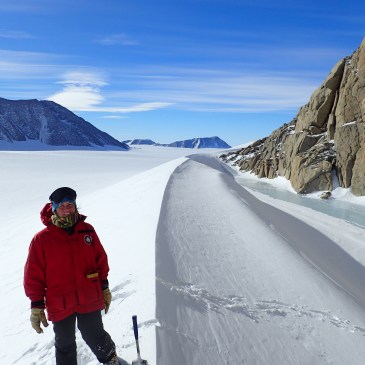
The end result is that we have collected a lot of granite. So things are going well. We are surrounded by stunning granitic spires under clear sunny skies in 15-30 degree Fahrenheit temperatures on Le Couteur Glacier. This is an incredibly beautiful place. I doubt that many people have the opportunity to travel across glaciers in a terrain like this where only a few people have ever explored. We were on an outcrop yesterday and spotted about 10 paleomagnetism bore holes likely from the 1995-96 expedition season led by Anne Grunow. Incredible! I do not think I have ever found paleomagnetism. drilling evidence before. Antarctica is a rare environment where the activity of humans remains completely unaltered after years of passing time.